Victor Trail Loop Hike In Palm Canyon

Palm Canyon has the largest native California fan palm oasis in the world. It is found in the Agua Caliente Reservation’s Indian Canyons which is located near Palm Springs, California. Our group first hiked near the top of the canyon ridge where we viewed the palm trees from above. We returned walking though the valley with the magnificent palm trees towering above us.
Before starting we checked out the visitor center and trading post where there was a view of Palm Canyon.
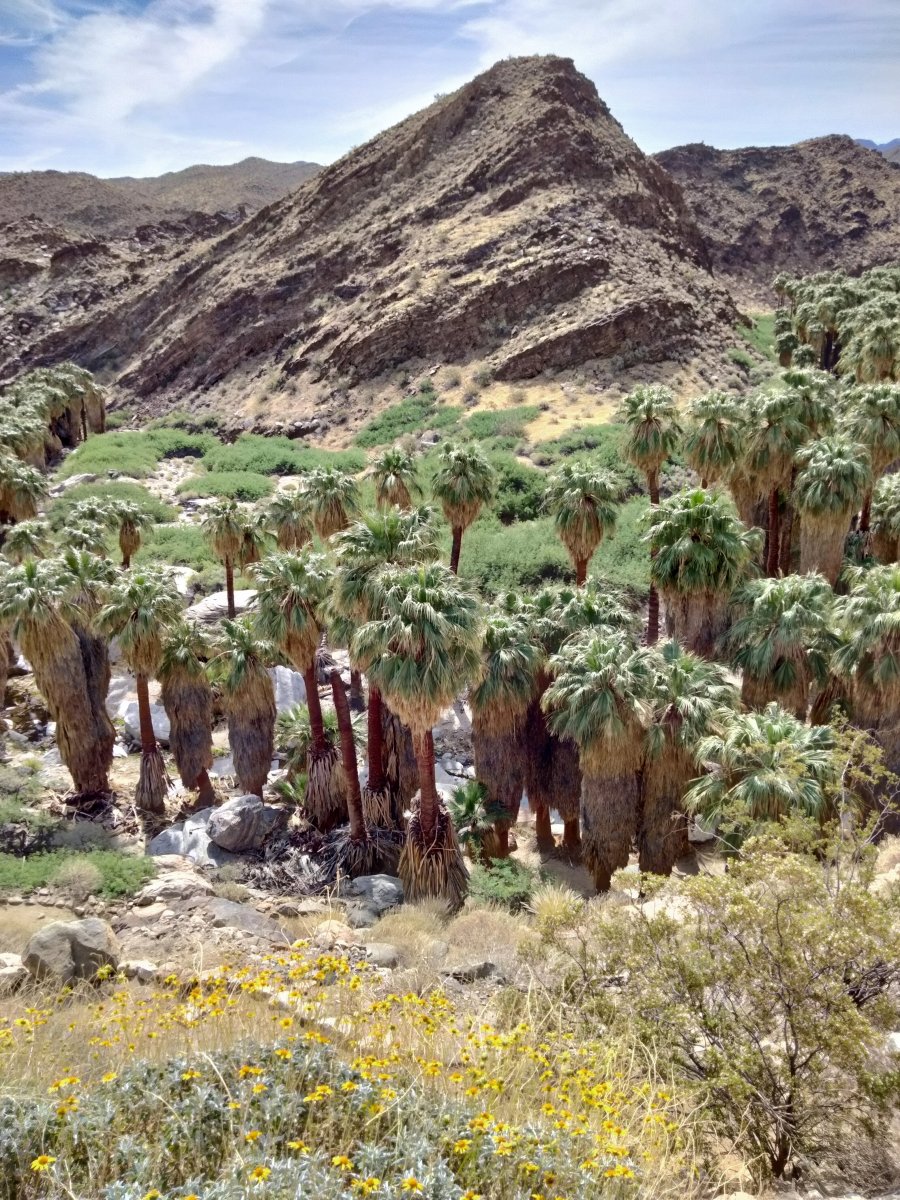
We went a short distance downstream to get to the Victor Trail and after crossing Palm Canyon Creek started hiking up hill to get to the top of canyon.

Before long we had some views out to the valley of the Palm Springs area.
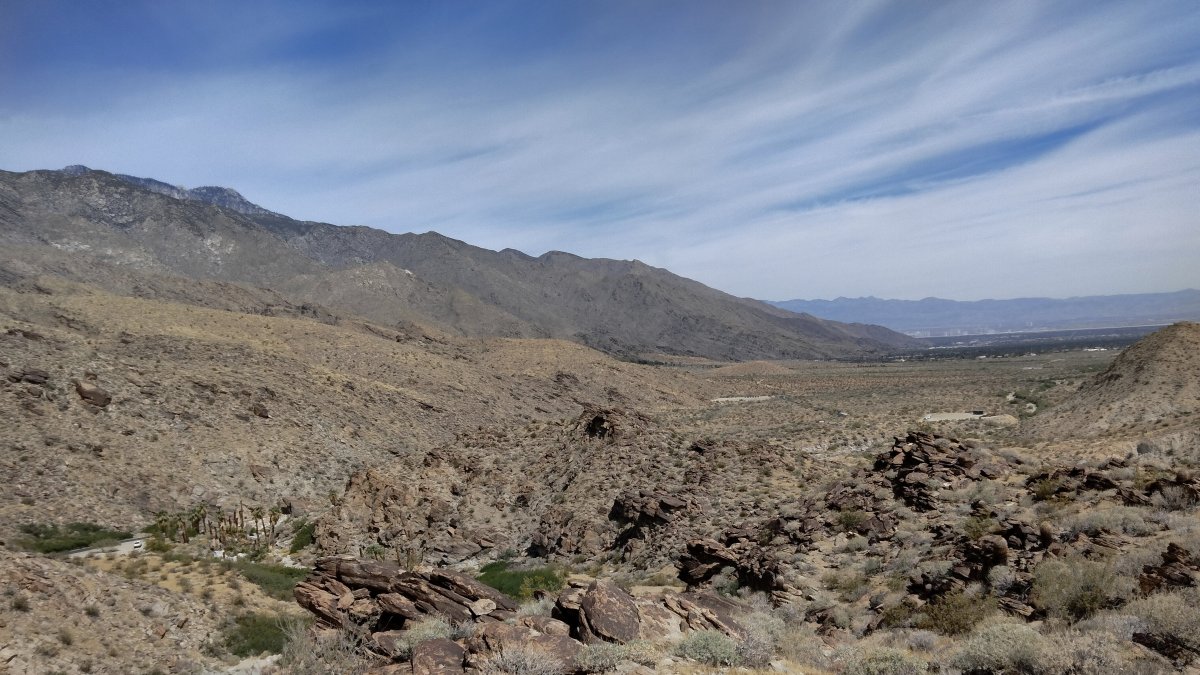
We could also see the trading post where we started.
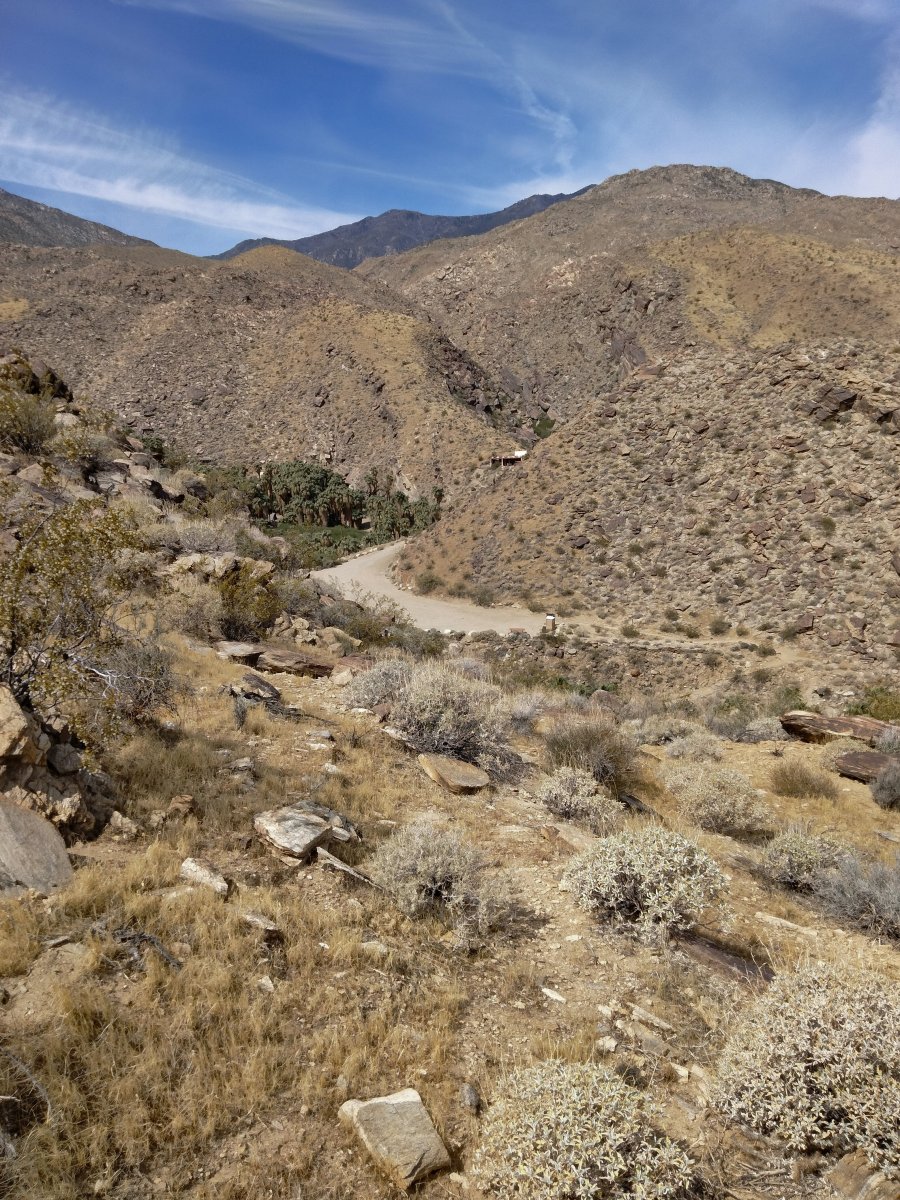
The trail went near the ridge line.
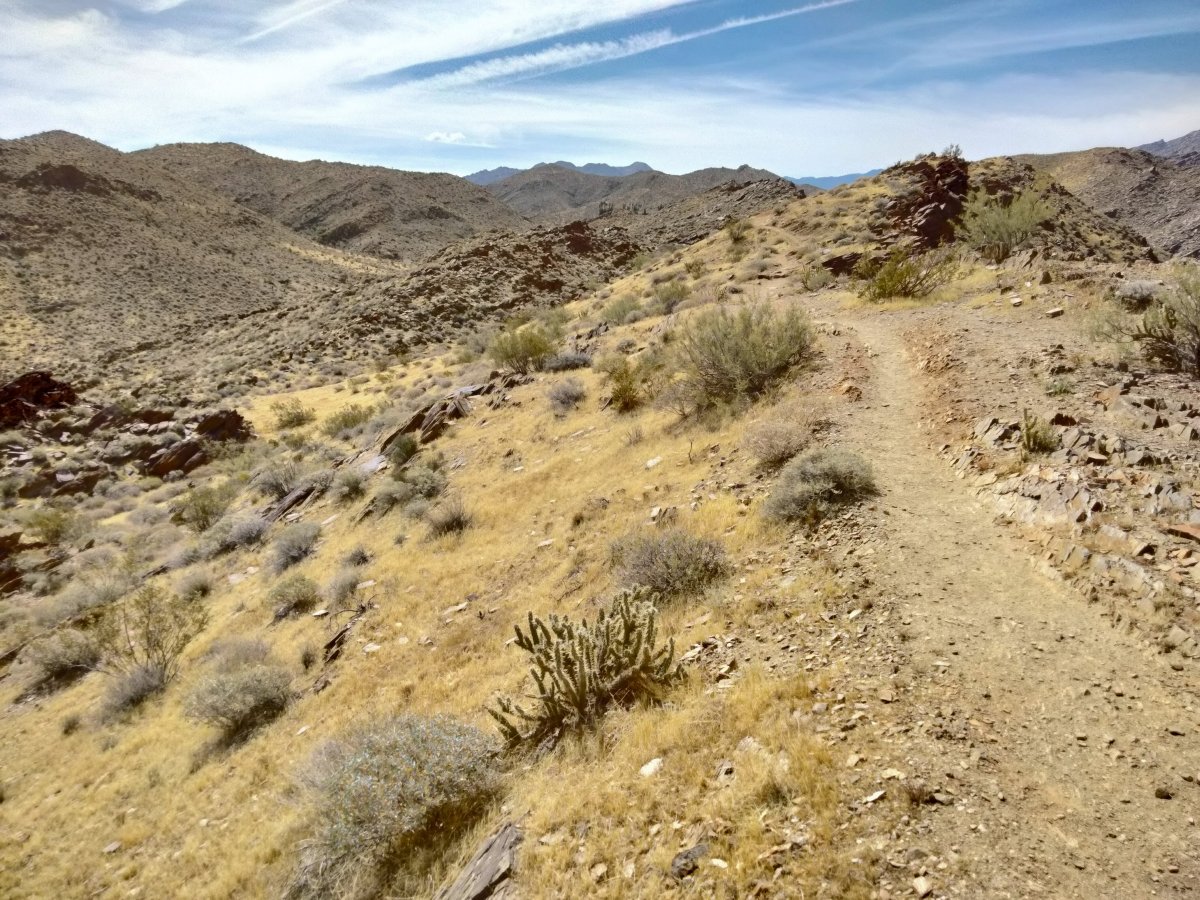
We could sometimes look down at the palm trees.
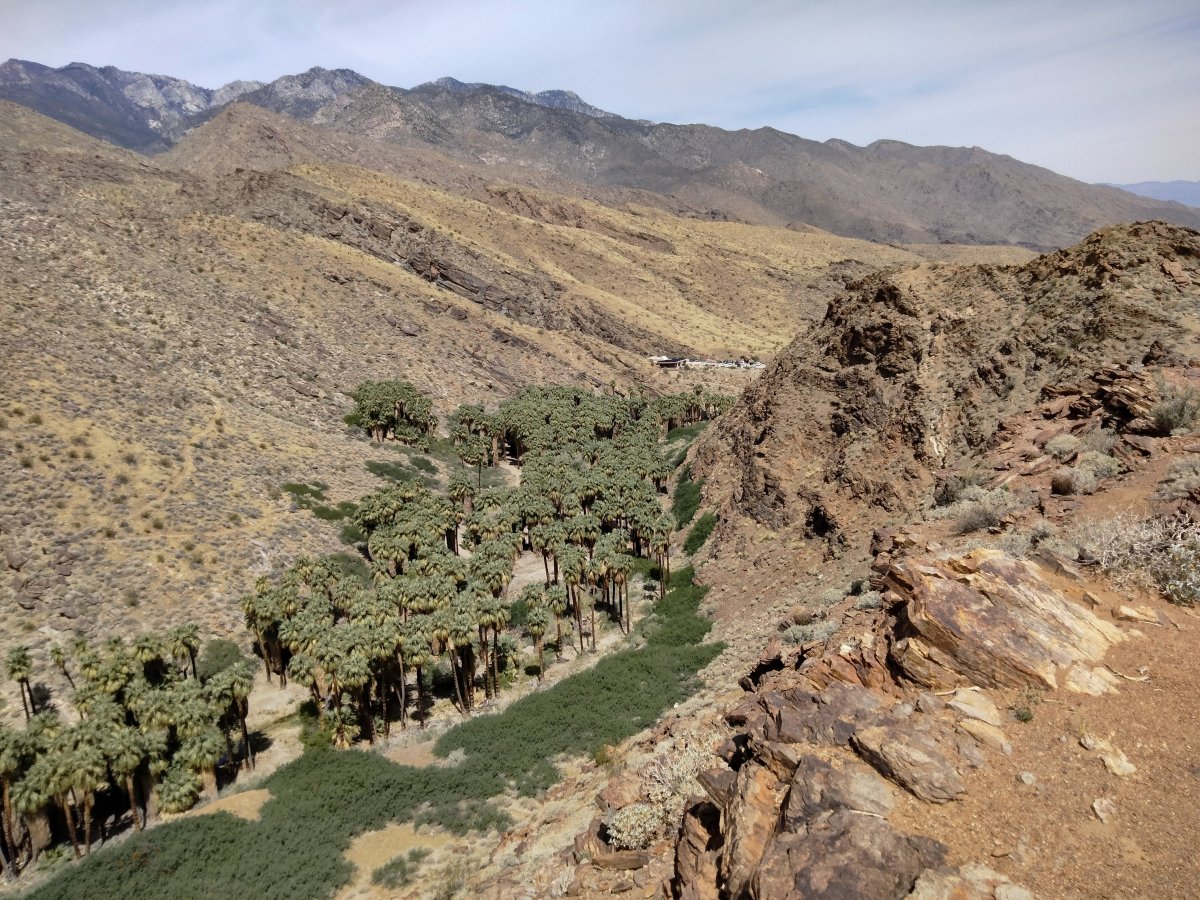
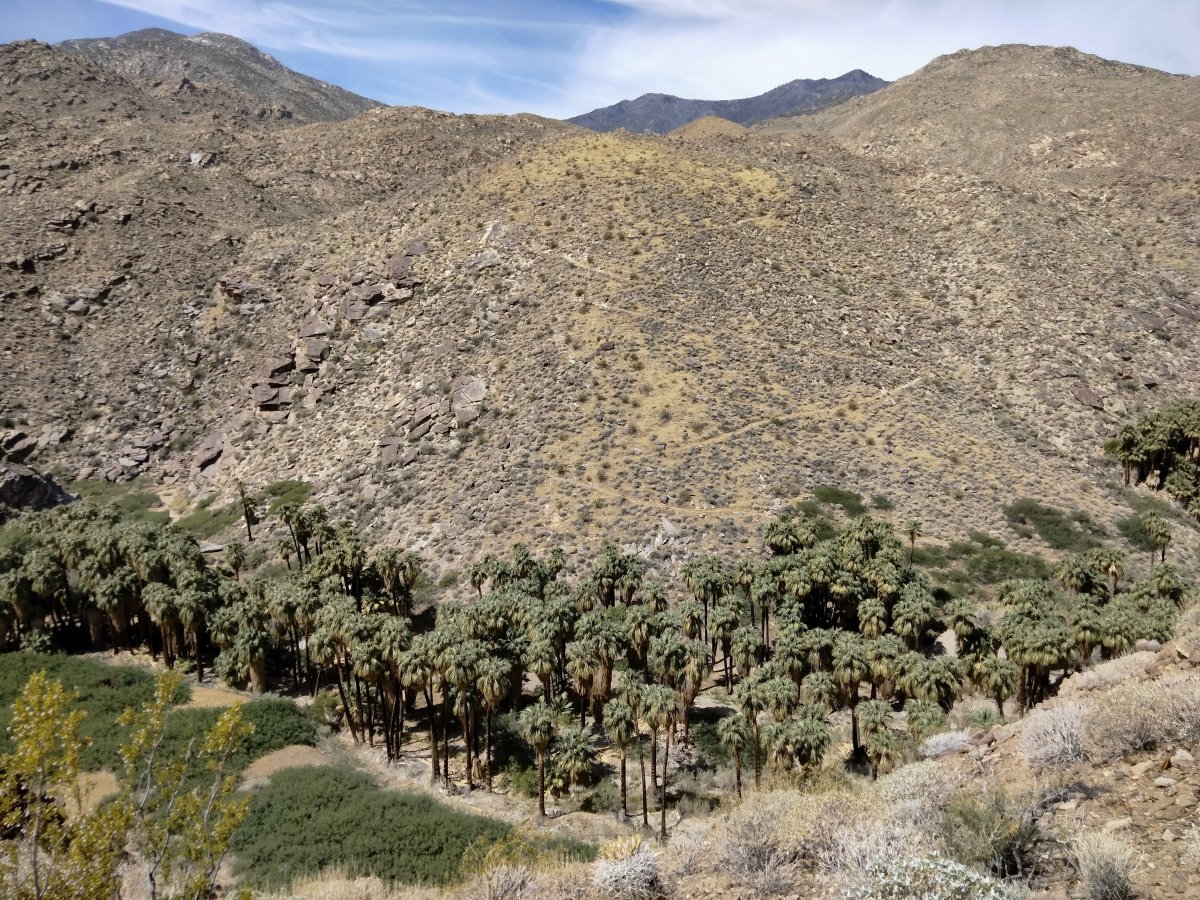
In this view across the valley, if you look closely there is a trail that zigzags up the hill. This is the East Valley Trail one of the many other trails in Indian Canyons. The park extends over 31,500 acres with over 60 miles of hiking trails.
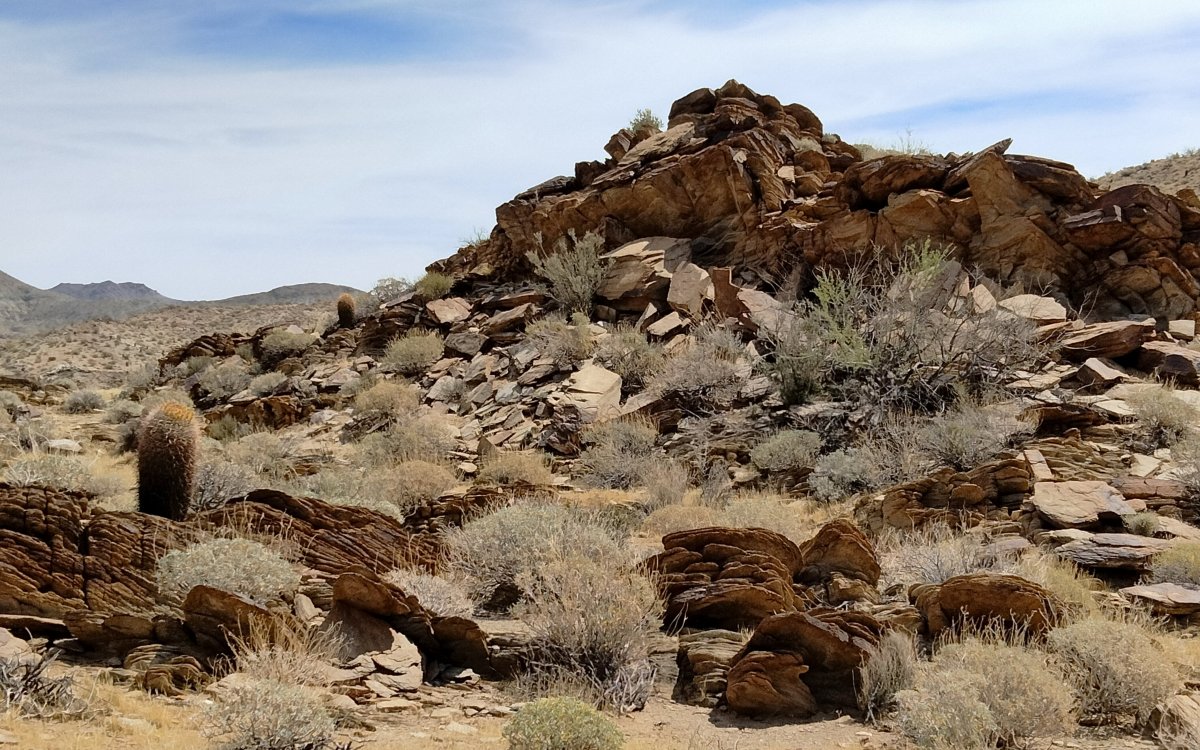
The strata in the rocks shows the upheaval of the rock.
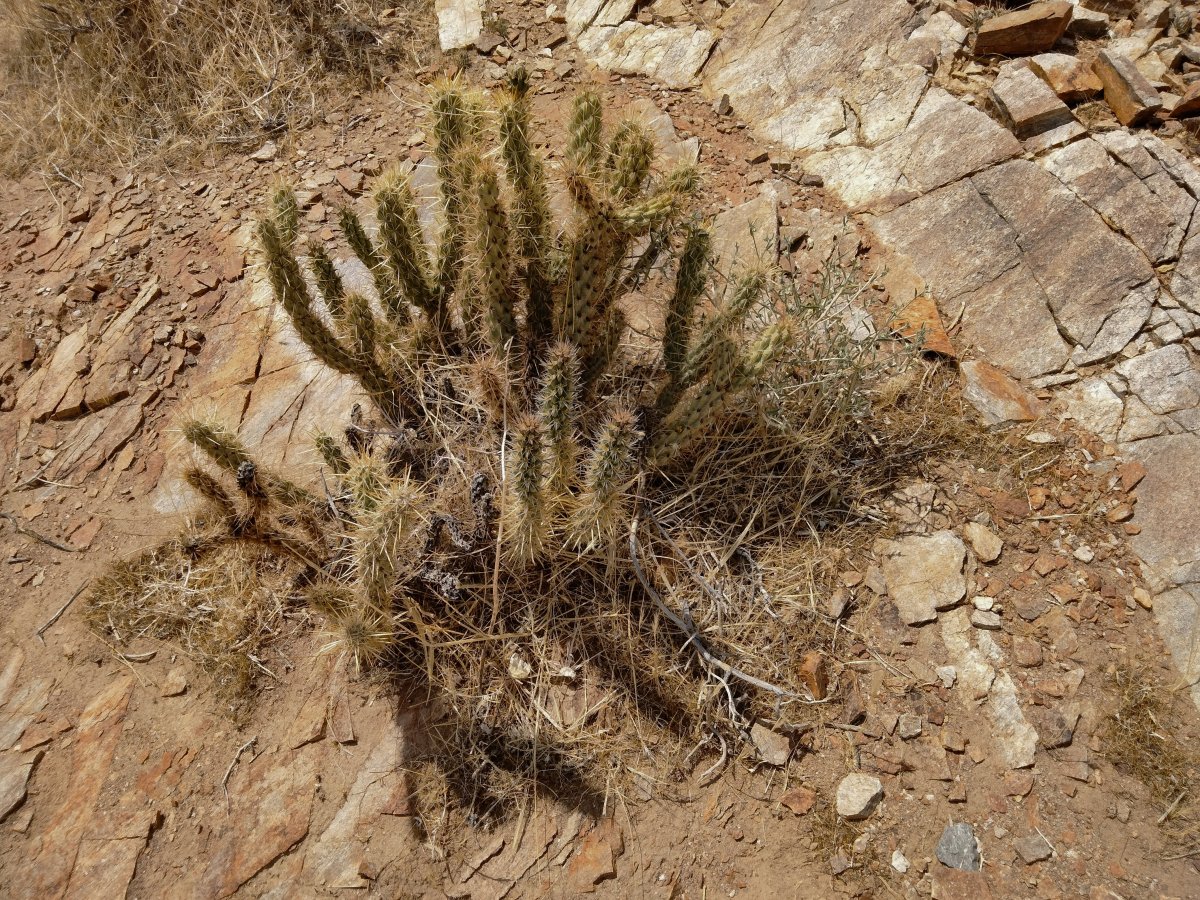
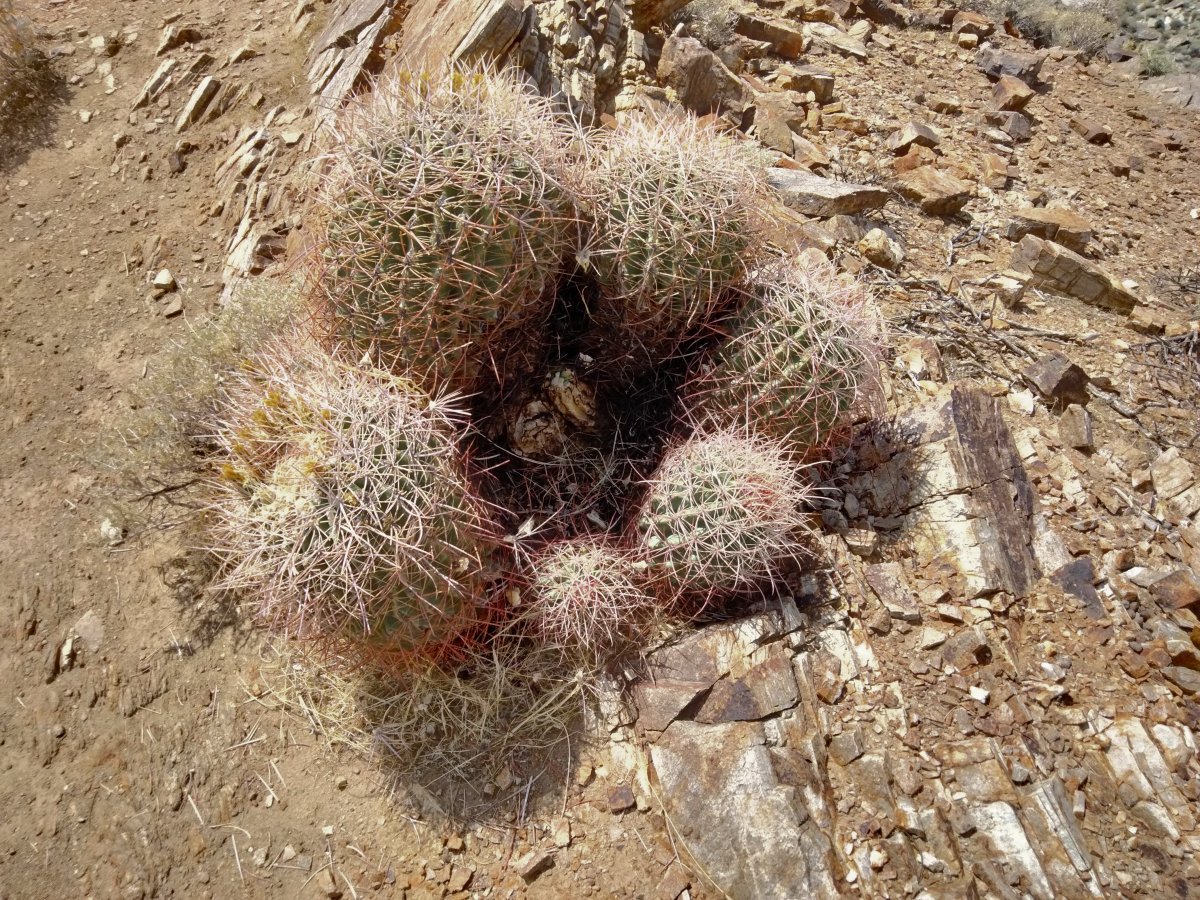
There is some very prickly cactus.
This is a panorama view of Palm Canyon.
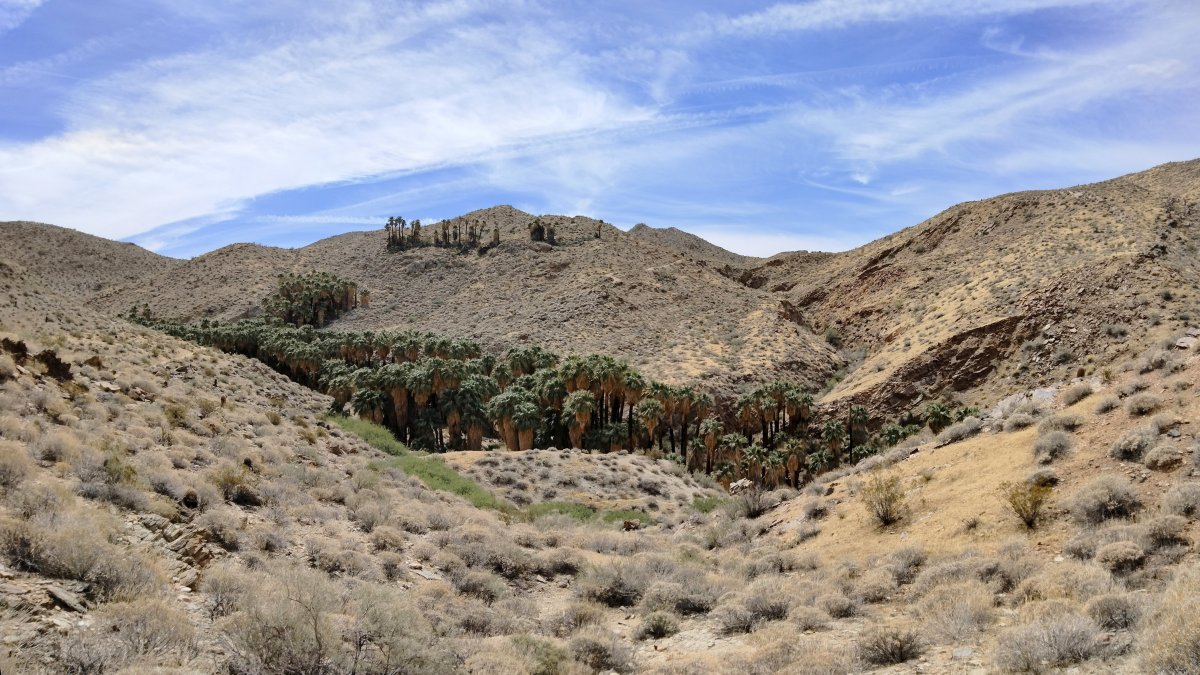
We start to descend to the canyon floor where the Victor Trail comes to the Palm Canyon Trail which runs 15 miles along the canyon. We will only hike on about one mile of the Palm Canyon Trail.
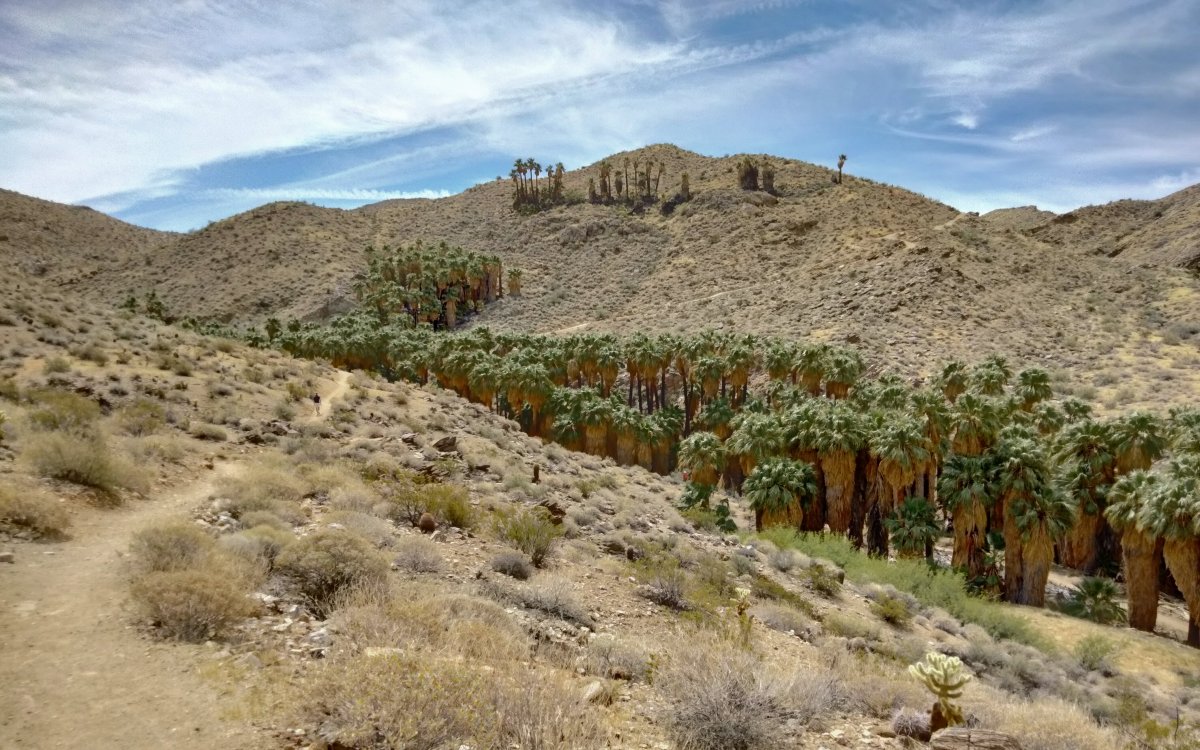
There are people walking along the canyon floor if you look closely.
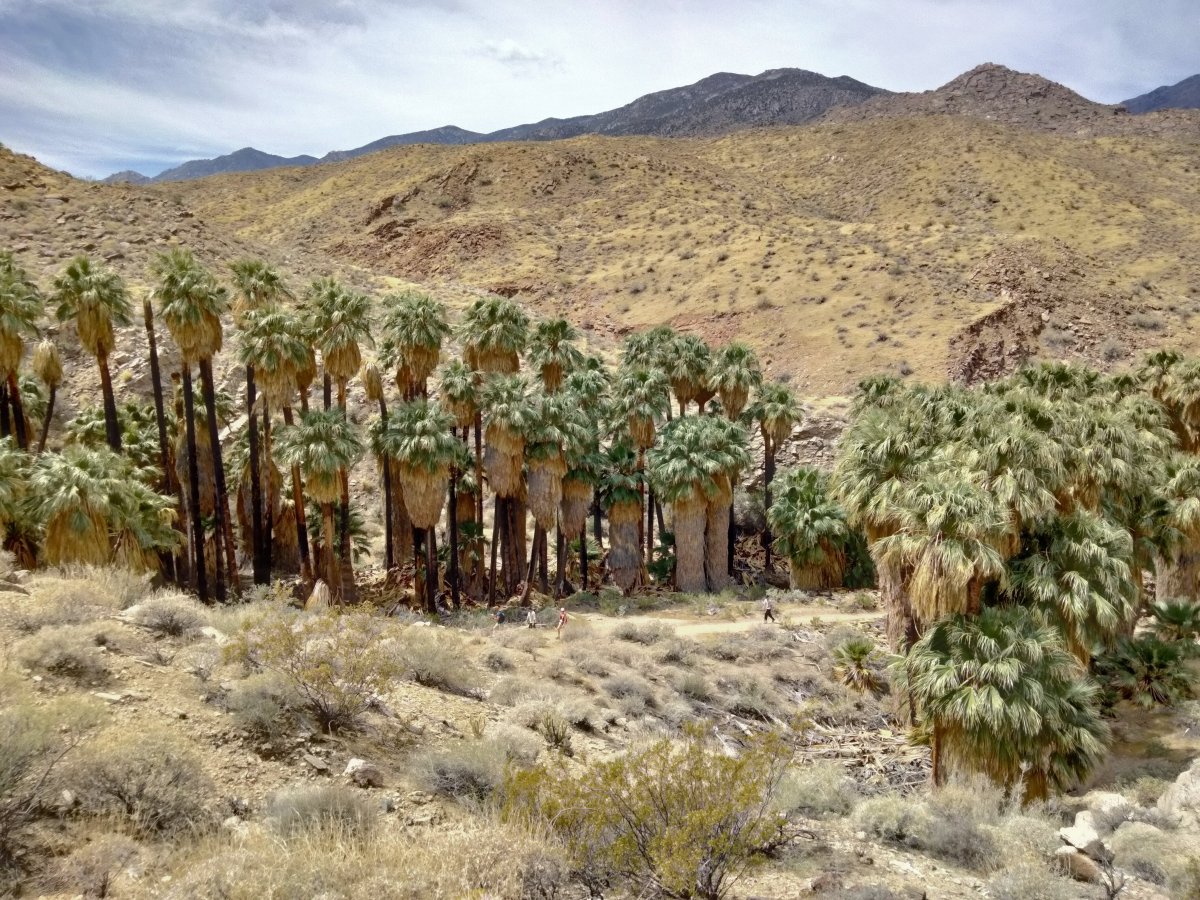
Once in the valley we see different sizes of palm trees. The Washingtonia filifera palm tree, commonly called the California fan palm, is the only palm native to the Western United States. It is also one of the country’s largest native palms.
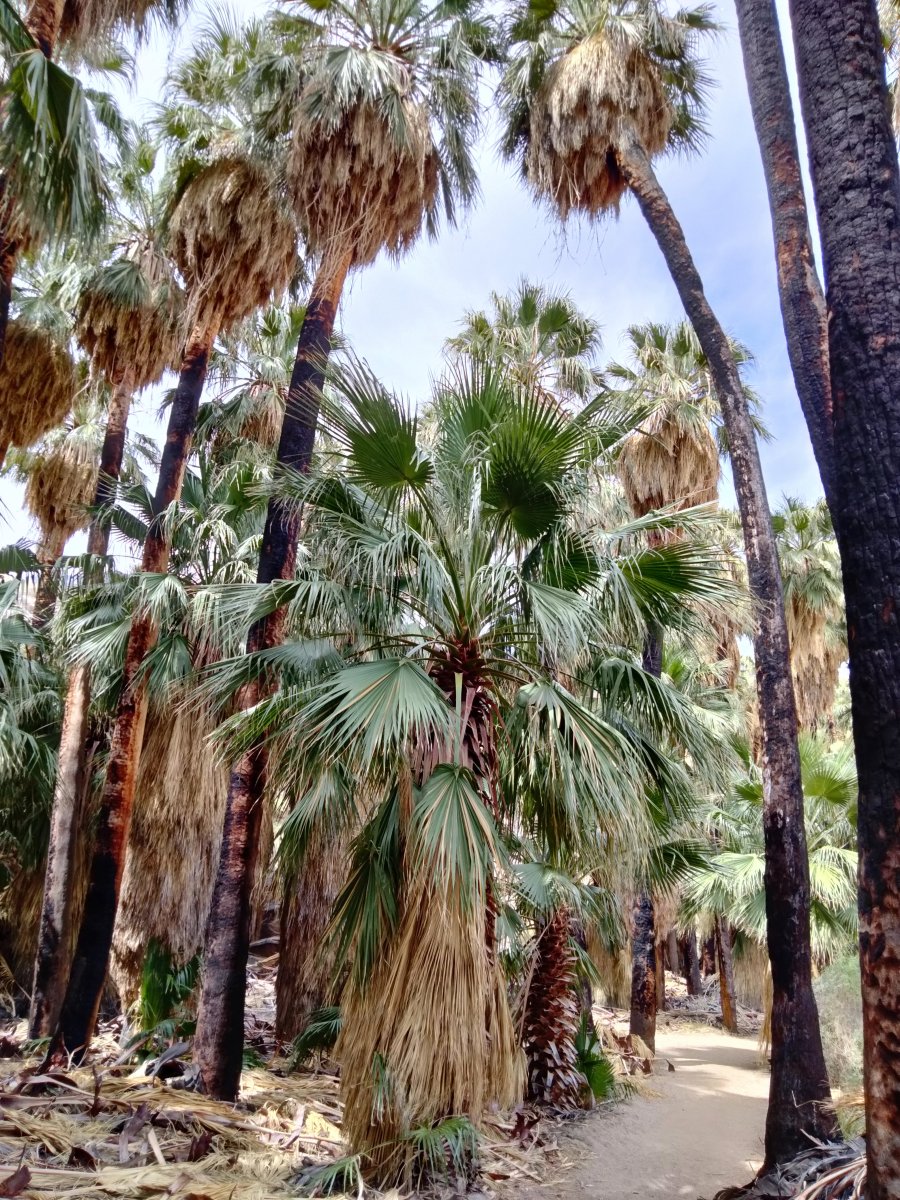
When the California fan palm fronds die they remain attached and drop down to cloak the trunk in a wide skirt. This provides a place for small animals and insects to inhabit. While the skirts can burn, as seen on some of the trees here, trees can survive if crown fronds remain. The charred bark can also help fortify the trunk against future flames.
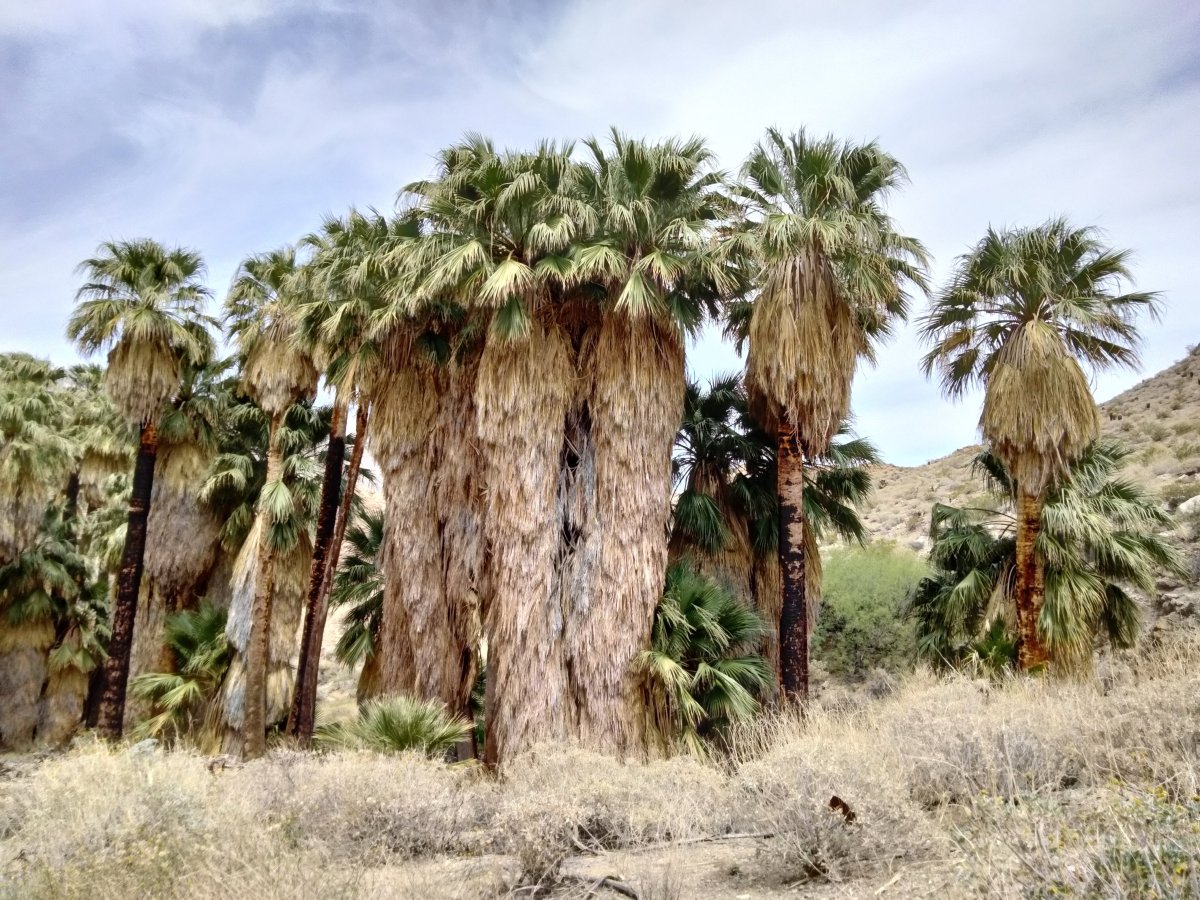
Walking among the palms was pleasant. In some places there was a little water in Palm Canyon Creek.
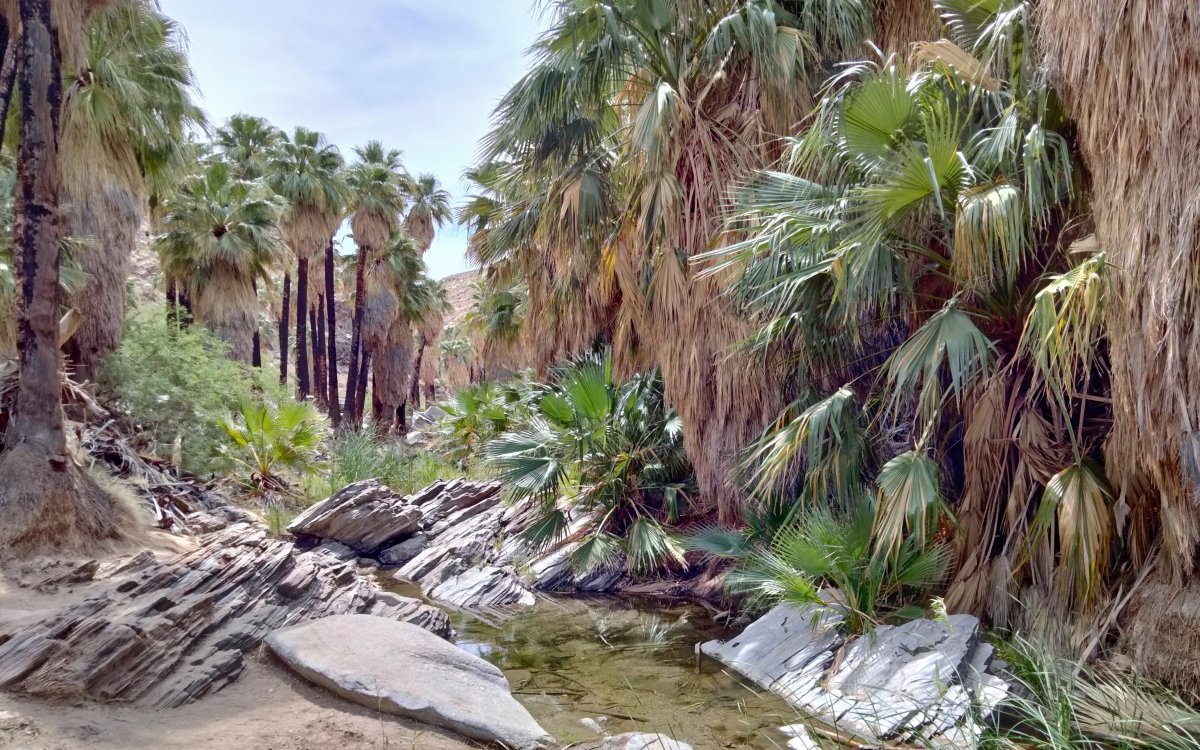
In other places the canyon was dry.
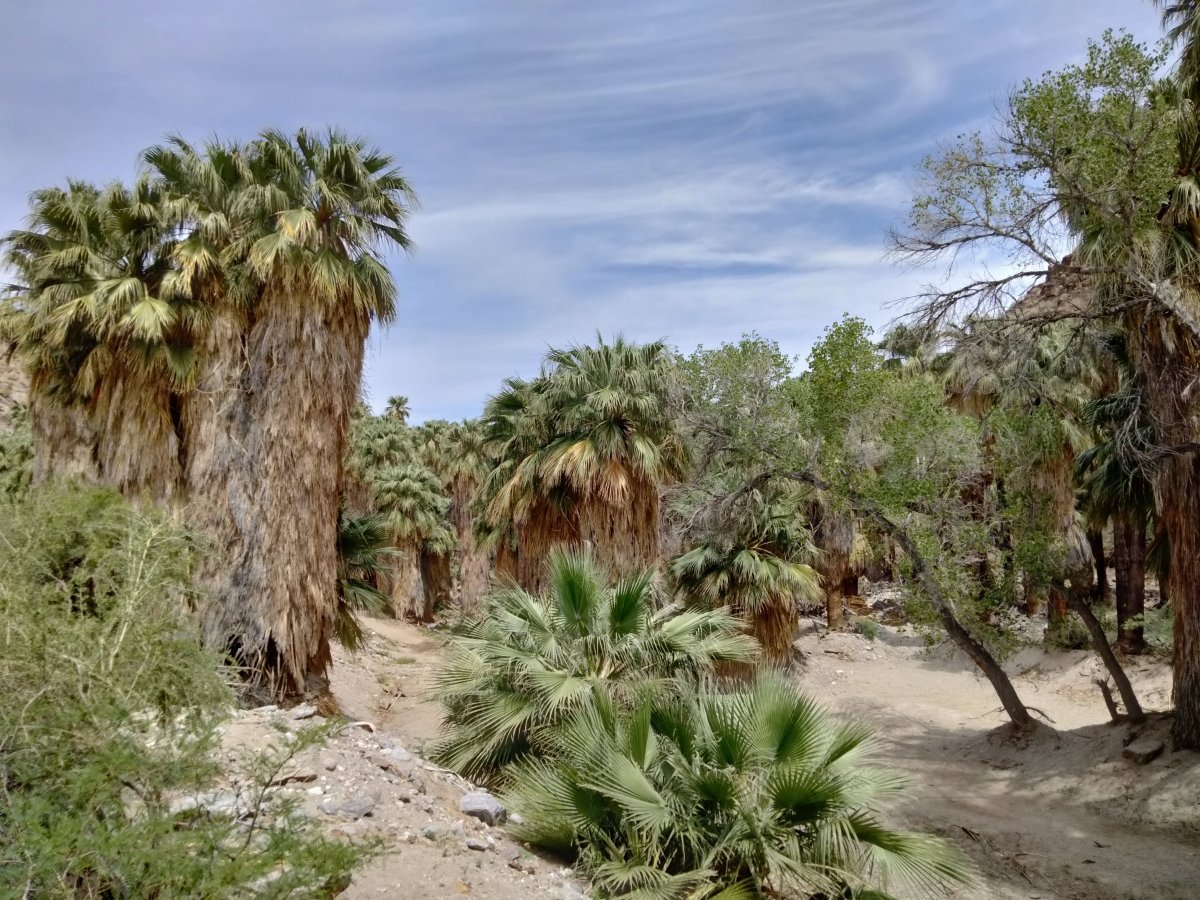
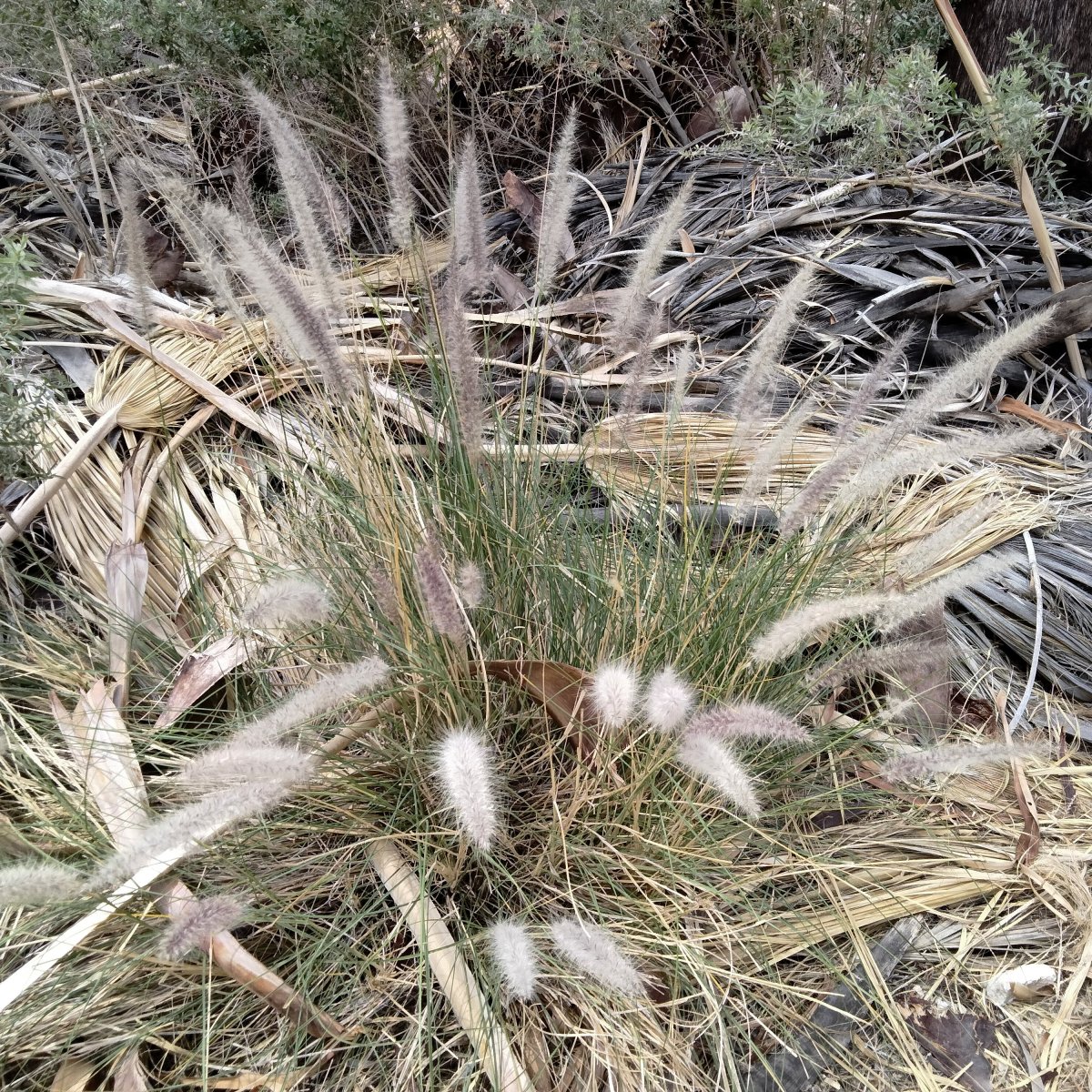
There were some grasses with graceful seed heads. This appears to be Fountain Grass which unfortunately is an invasive plant from Africa.
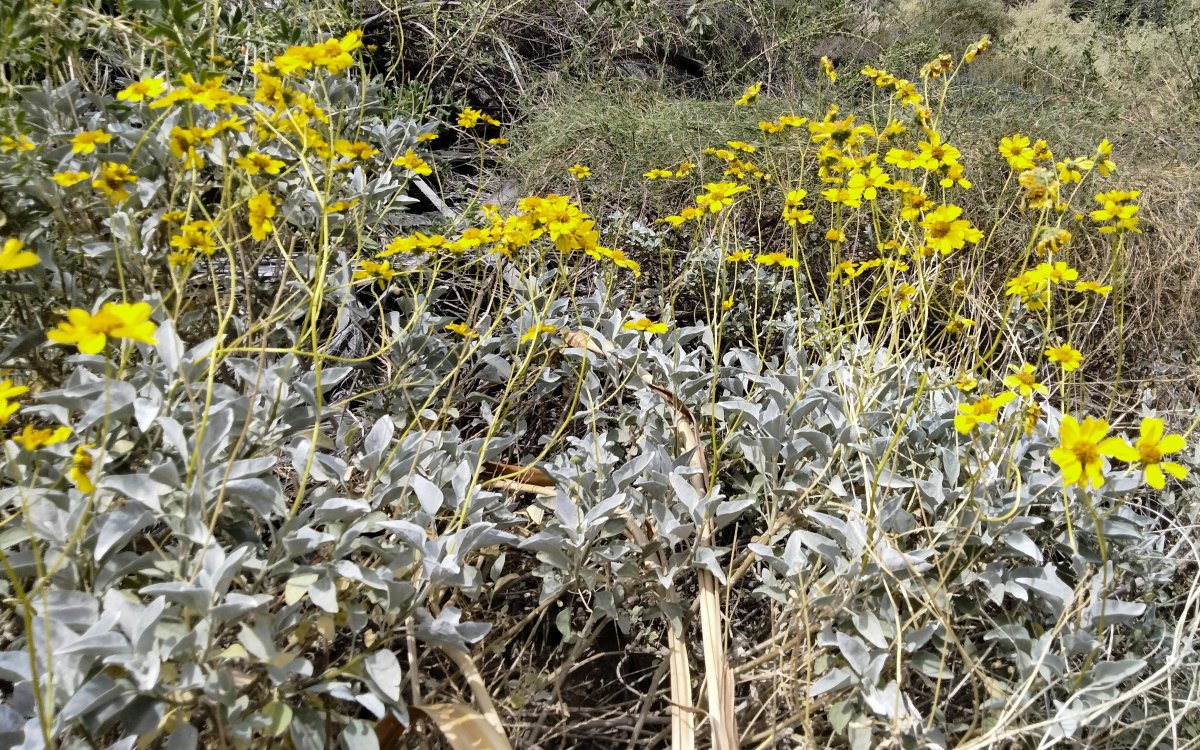
There was not much in the way of flowering plants other then the colorful brittlebush.
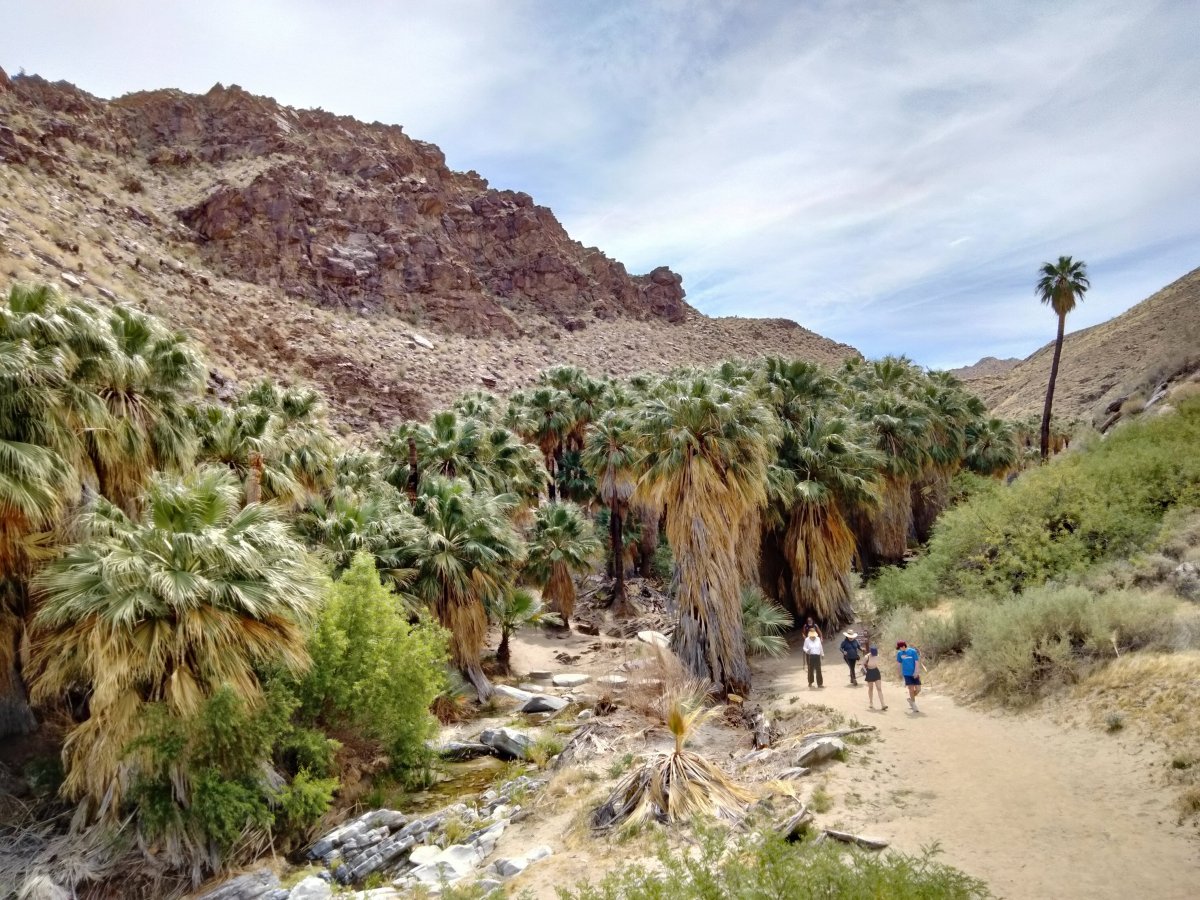
The people in this picture help show the scale of the palms.
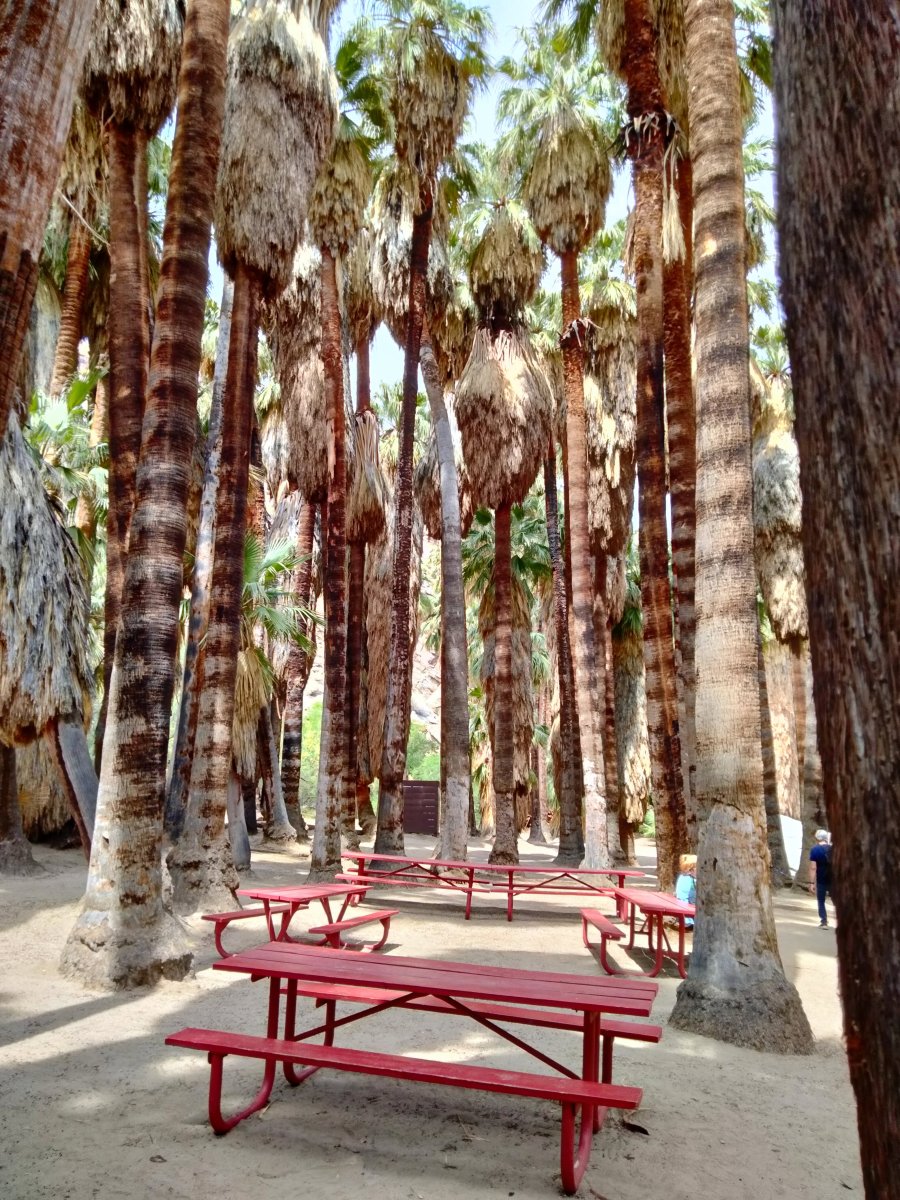
We are nearing the trading post where there is a picnic area among the palms.
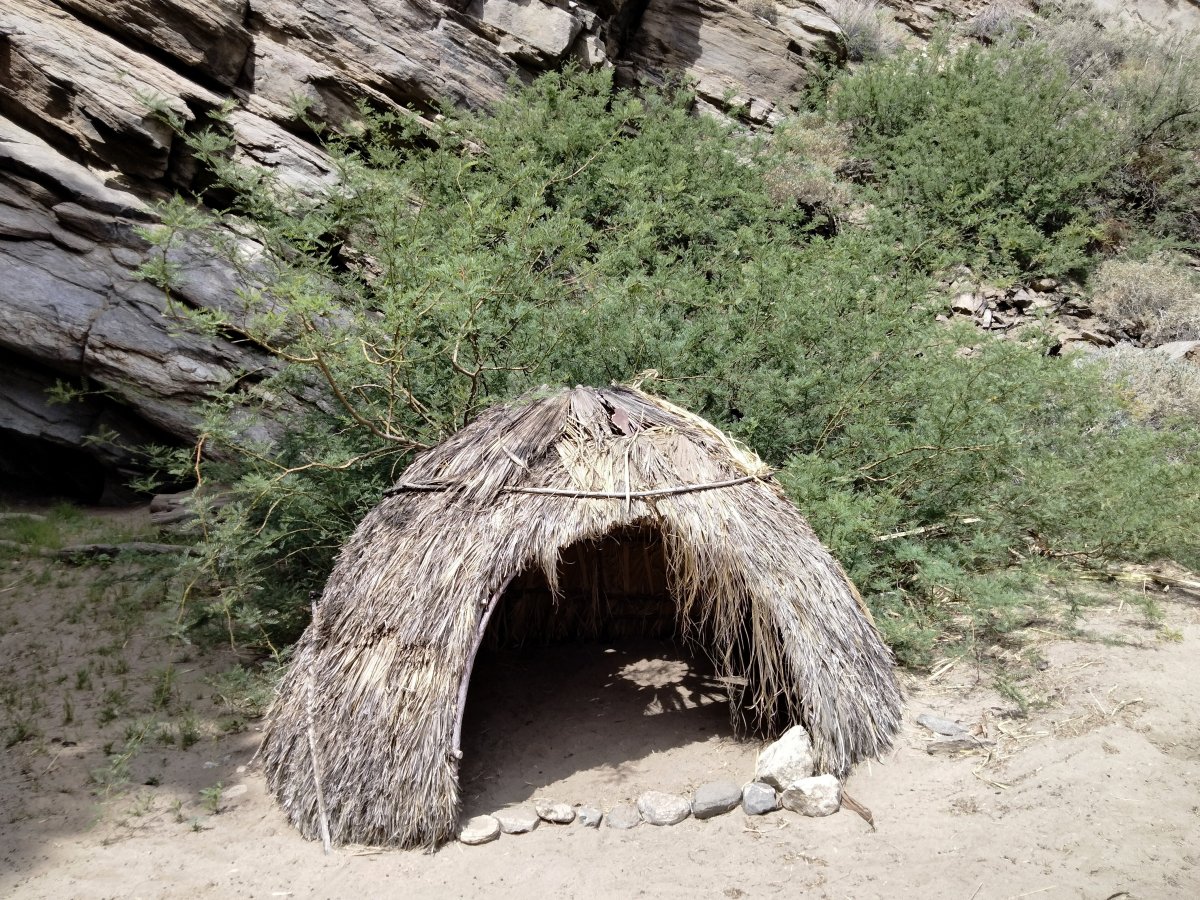
The Indian Canyons area has served as the home of the Agua Caliente Band of Cahuilla Indians for thousands of years. This is an example of one of their hut-like homes they once lived in. It is covered with fallen palm fronds with a hole on top that allowed for cooking inside the structure.
As we near our starting point there is a nice view downstream.
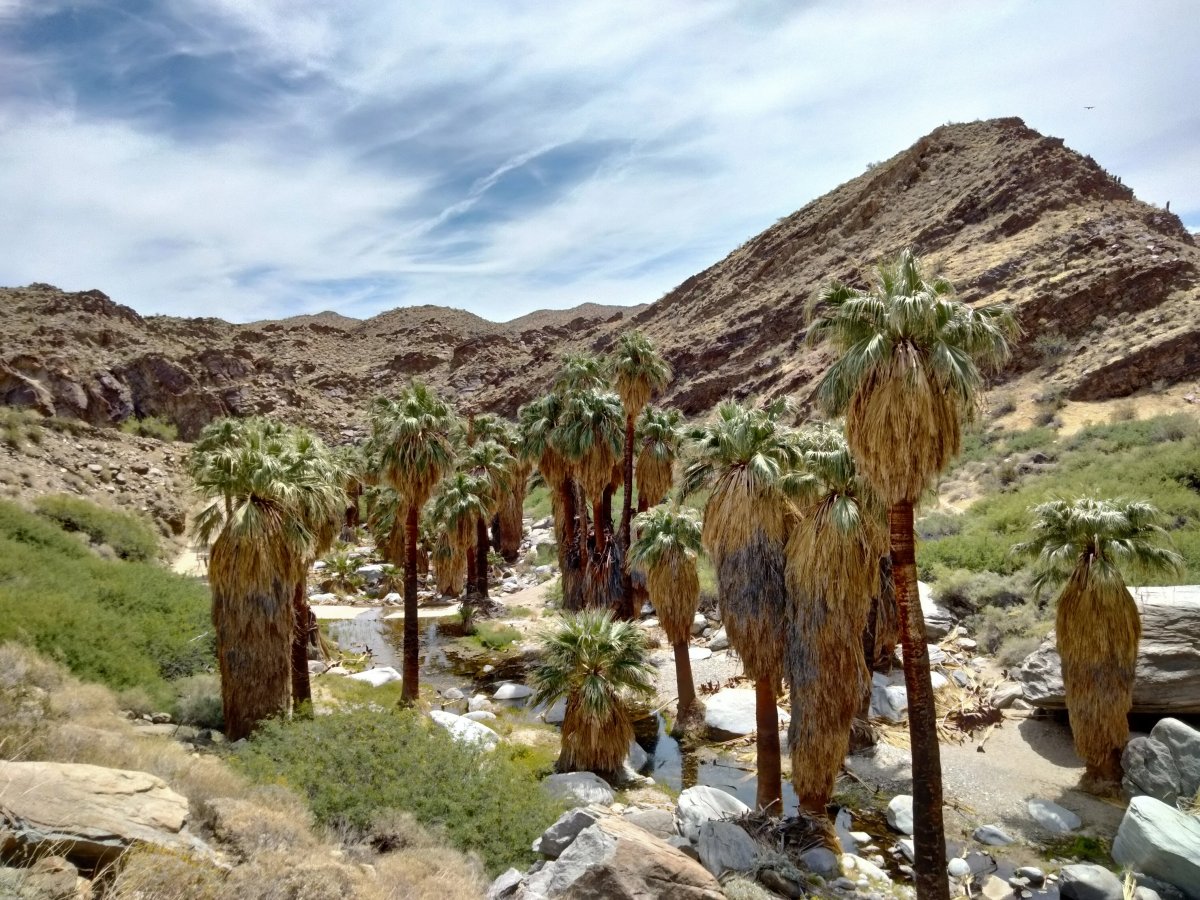
One last look upstream of Palm Canyon before we leave.
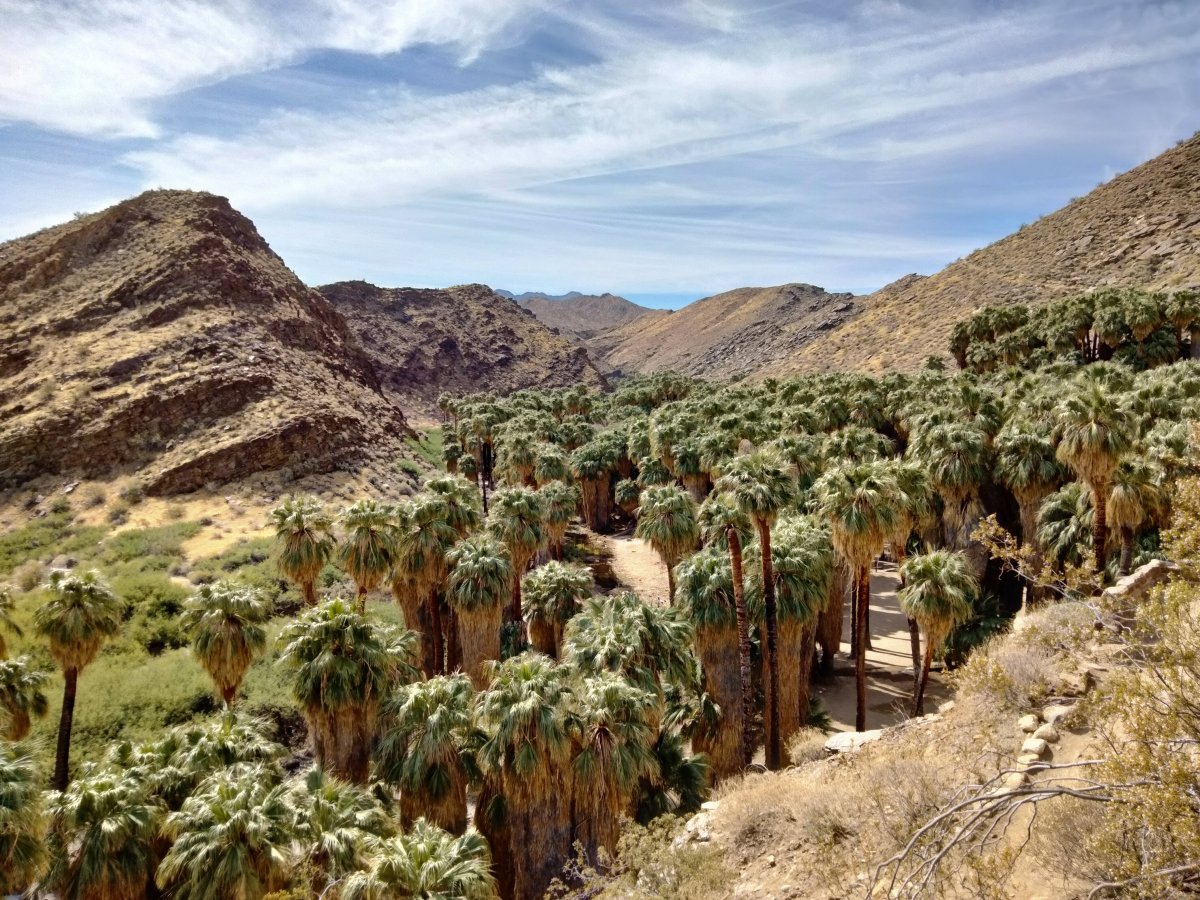
We had a nice hike and were able to view Palm Canyon from different perspectives. With all the trails there are in the Indian Canyons we will have to return someday to do more hiking.
For these pictures and more see the Victor Trail in Palm Canyon Gallery
More Information:
Information on hiking the Indian Canyon trails including Palm Canyon
Blog post on hiking the Victor Trail loop by Weekend Sherpa