Boston’s Harvard Arnold Arboretum in April
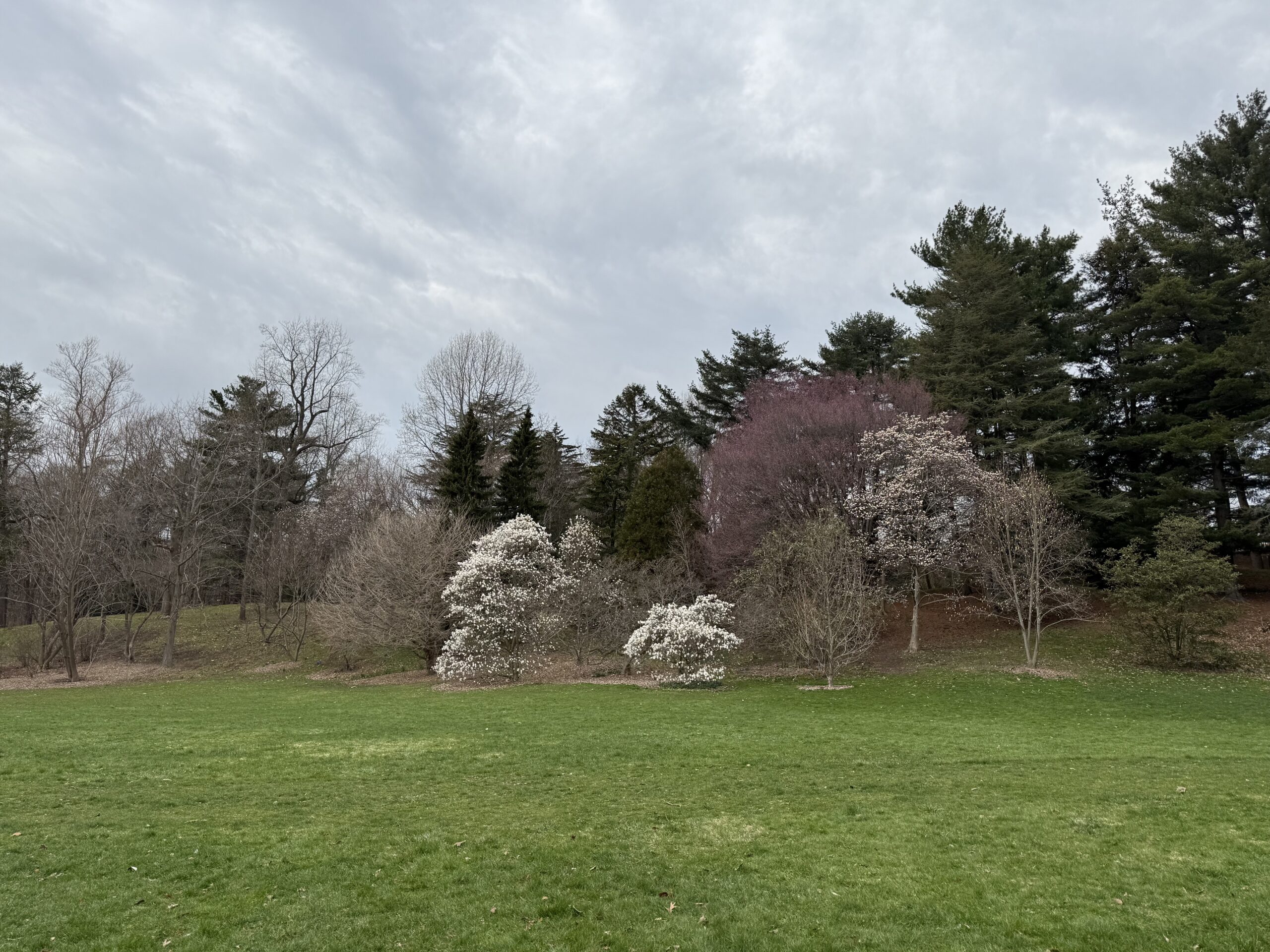
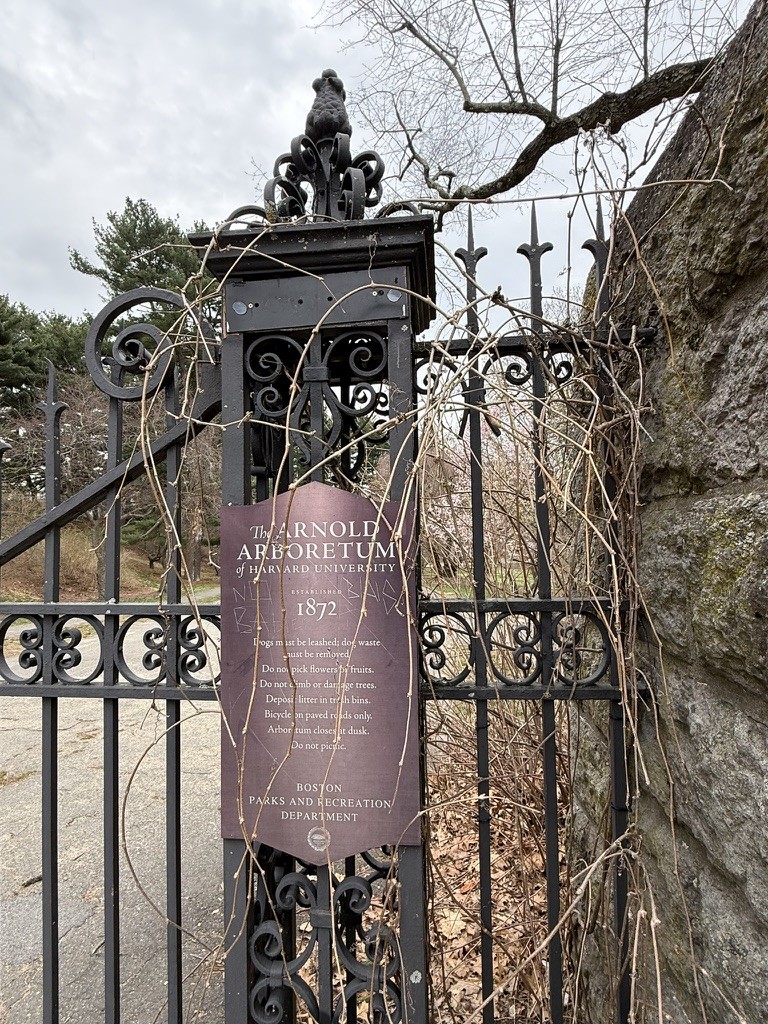
One of our favorite places to visit when we come to Boston is Harvard’s Arnold Arboretum. It has the distinction of being North America’s oldest public arboretum. This nature preserve is situated on 281-acres in the center of the busy community of Jamaica Plain, Boston. The free public park and botanical research institution seems very unassuming and quiet as motorists drive by on the busy streets. But, even in April, when the landscape is still bleak, there we found beauty along the paths and trails. As we walked along, we observed that many of the oriental trees would soon be blooming.
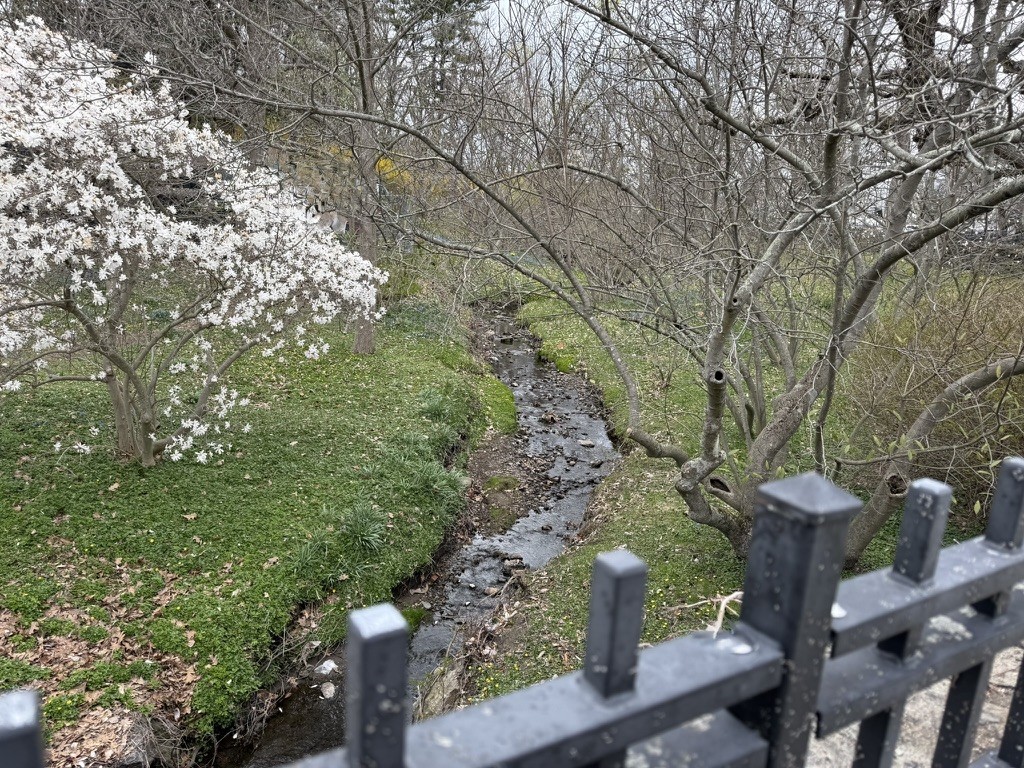
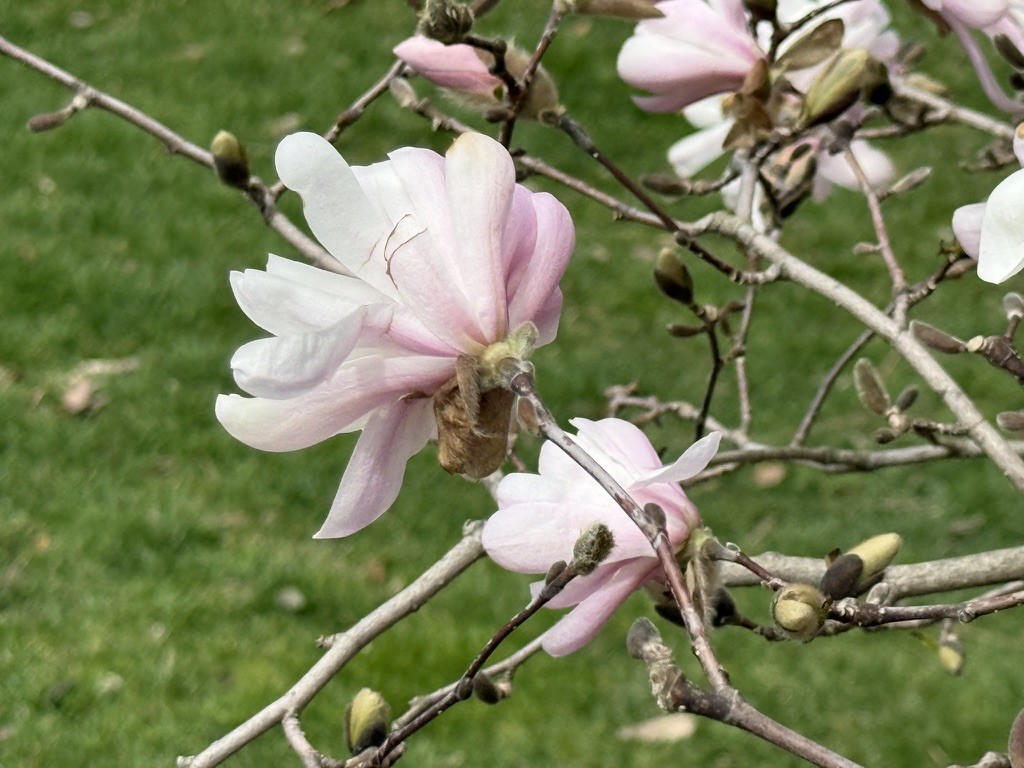
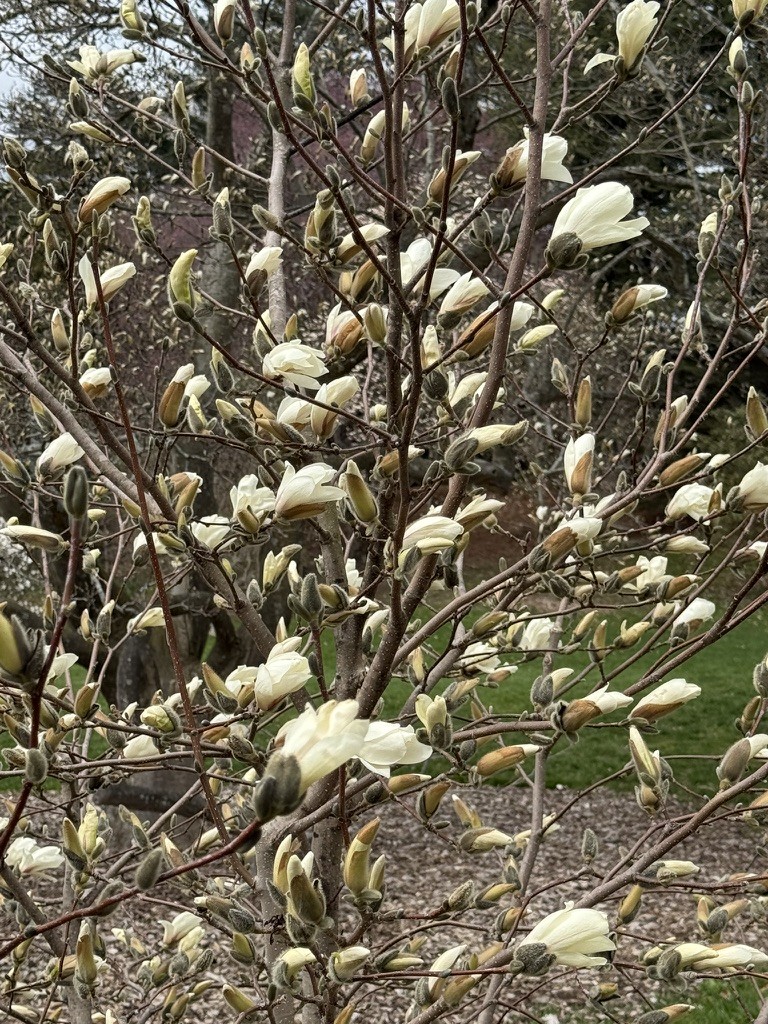
At the west end of the park, the arboretum features a grove of magnolia trees. The blossoms of these oriental magnolias are some of the most beautiful anywhere. While many magnolia trees are evergreen, most of these magnolia trees were deciduous ones. They shed their leaves during the winter. The buds stood out on the bare branches.
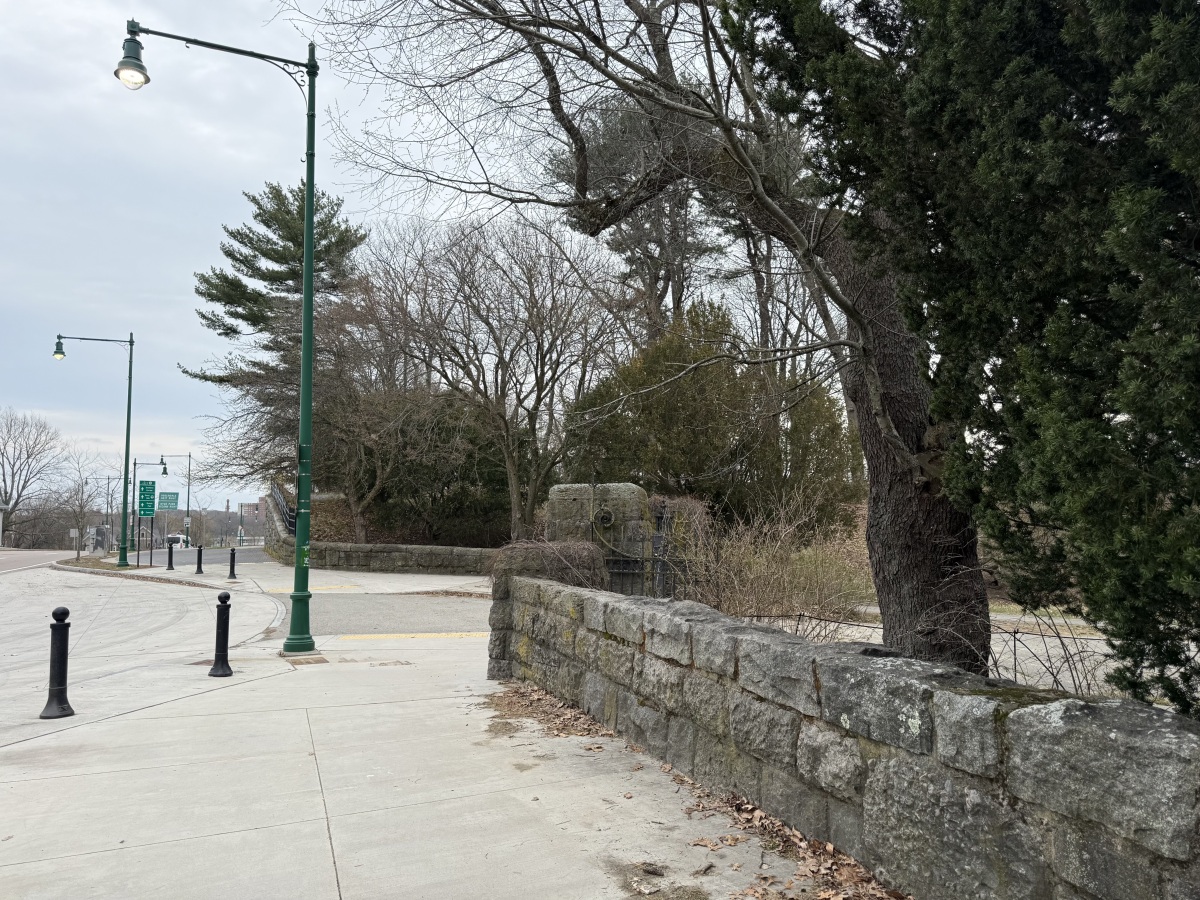
The arboretum is flanked on one side by grey stone walls.
The arboretum is part of the Emerald Necklace park system. The Emerald Necklace is a 1,100-acre, 7-mile long “green space” and chain of nine connected parks and parkways in Boston and Brookline, Massachusetts. It was designed by renowned landscape architect Frederick Law Olmsted between 1878 and 1896. It connects green spaces from Back Bay to Dorchester and offers hiking, boating and a zoo.
The Harvard Arnold Arboretum was established in 1872. The botanical park features a world-renowned collection of temperate woody plants, particularly from eastern Asia and North America. It is home to 15,000 accessioned plants.
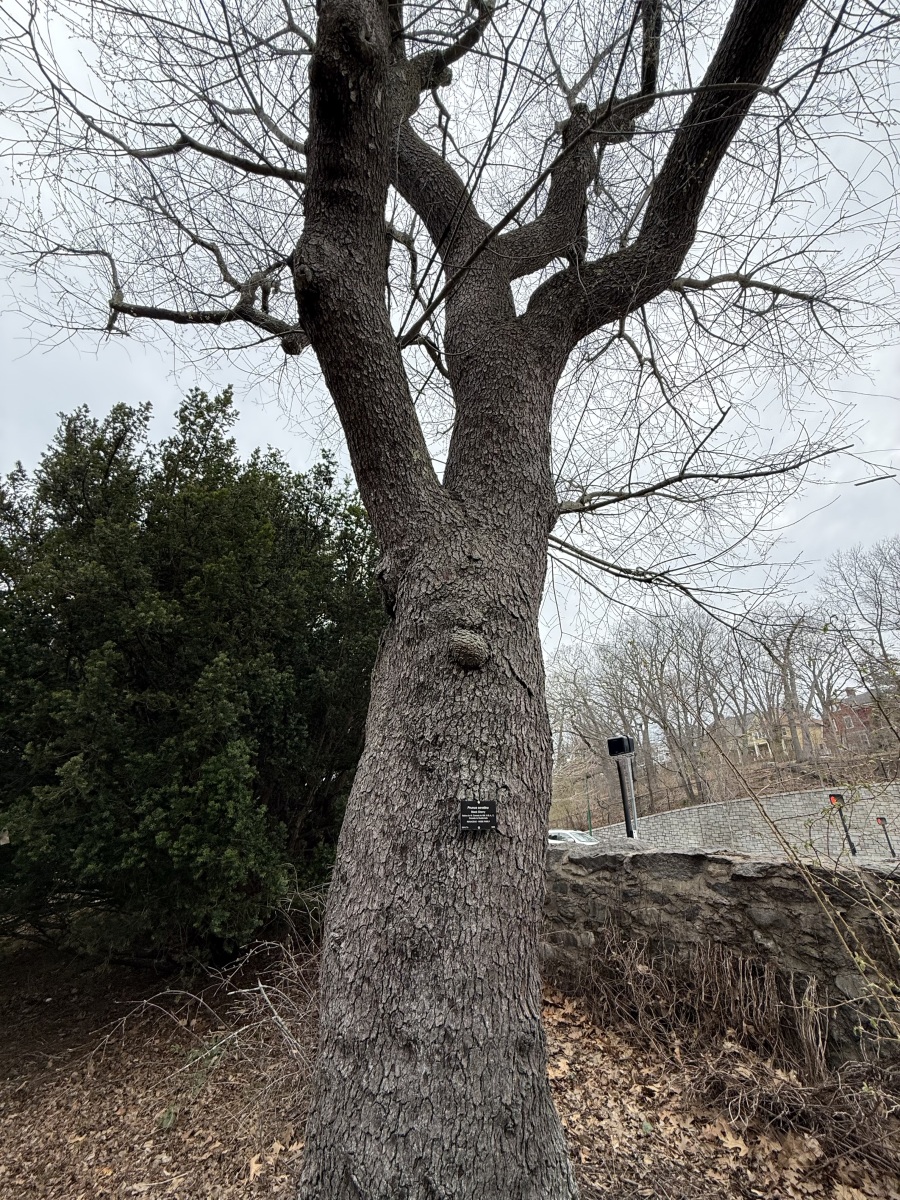
As we entered the park, we saw a stately, old cherry tree planted close the street. It is a prunus serotina, Black Cherry, native to Canada and NW U.S.A. and Eastern Canada to Guatemala. It is a member of the Rosaceae – Rose family. The tree is the largest and only commercially valuable native cherry in the eastern United State. It can grow to be 47 – 47 feet tall. It is prized for its high-quality, reddish-brown timber which is used in furniture-making.
The tree was not blooming now, but in a few weeks that will change as blooms emerge.
Walking further into the park’s entrance, however, we found many delicate pink blossoms on the branches of cherry trees. It made for a surreal landscape.
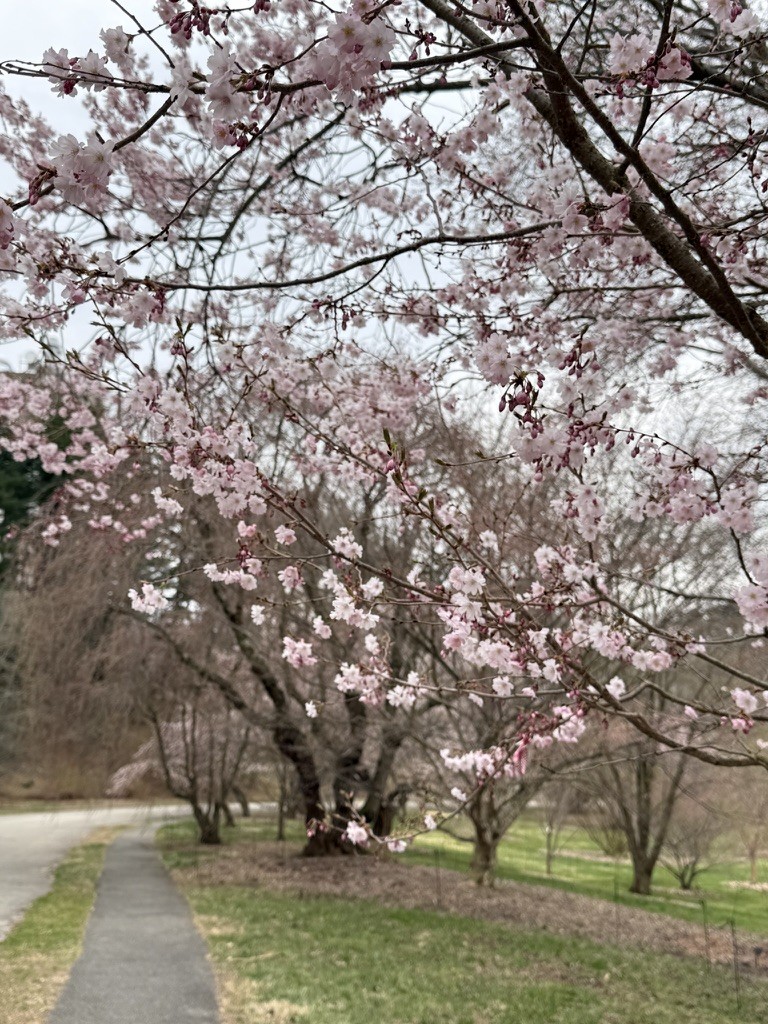
The arboretum has well-maintained paths which lead through groves of bushes, trees and other woody plants which will provide showy displays later in the spring and summer. Lilac bushes begin to bloom in May and their fragrance and blossoms are memorable.
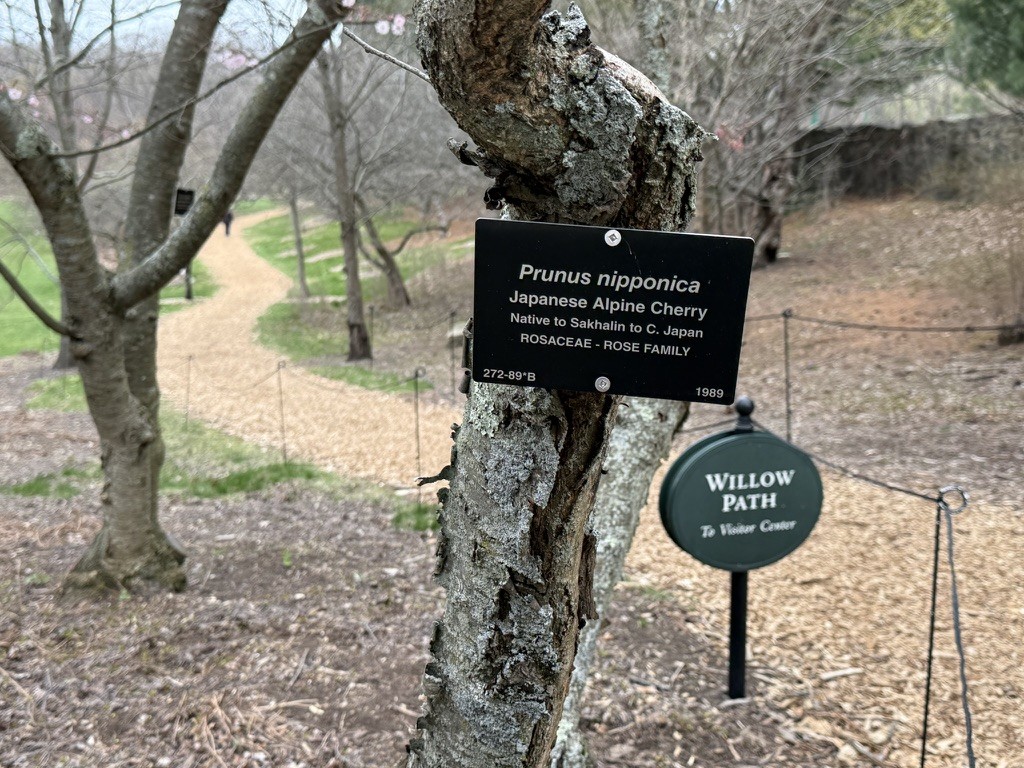
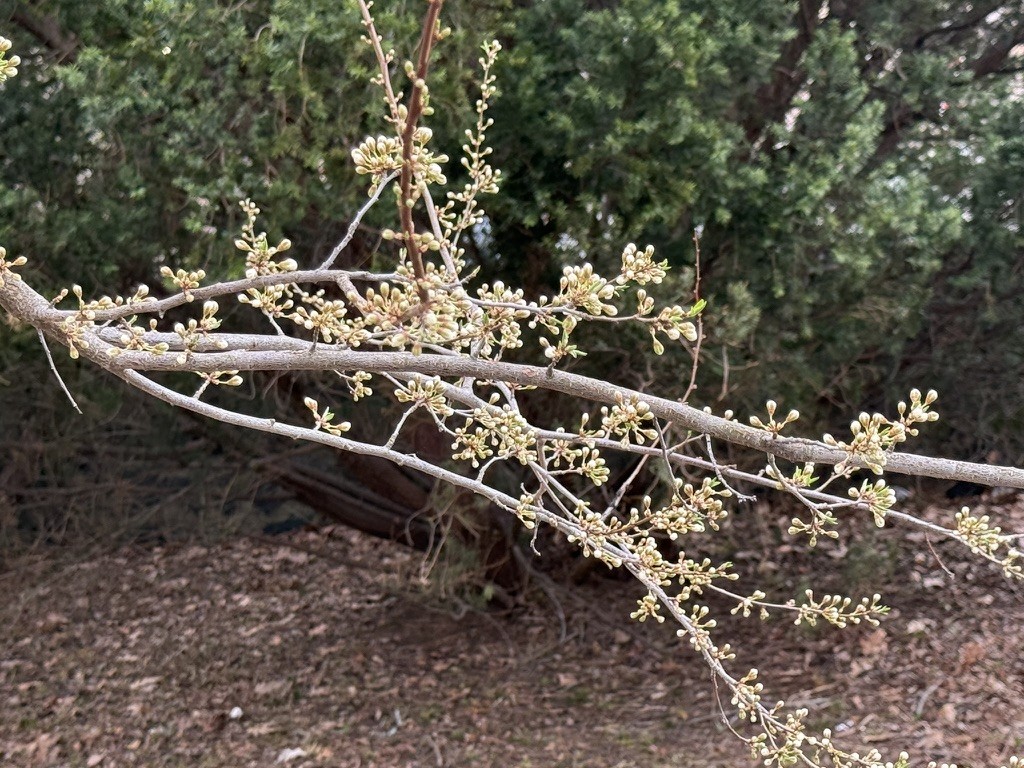
Next to the cherry tree, we saw an interesting plum tree. This was a Prunus alleghaniensis var. davisil which was a variety of the Allegheny Plum. It is native to the Eastern U.S.A. and also a member of Rosaceae – Rose family. This is a small tree or shrub and grows up to 15 feet tall. The trees can grow in thickets, particularly on moist soil. Some specimens have spines. In Michigan, the species has become invasive. Without leaves, the trunk gave a sculptured appearance. In April, the buds turn into distinctive white flowers which turn pink. It makes small fruit later in the summer.
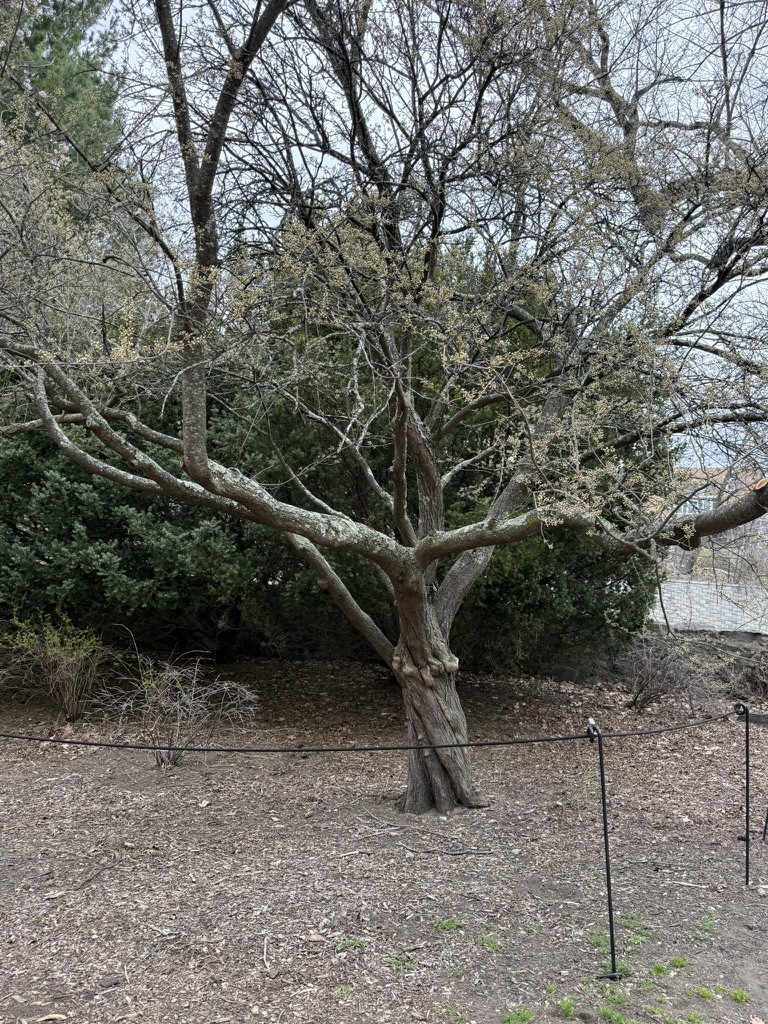
As we walked closer to the tree, we observed that the tree was full of buds.
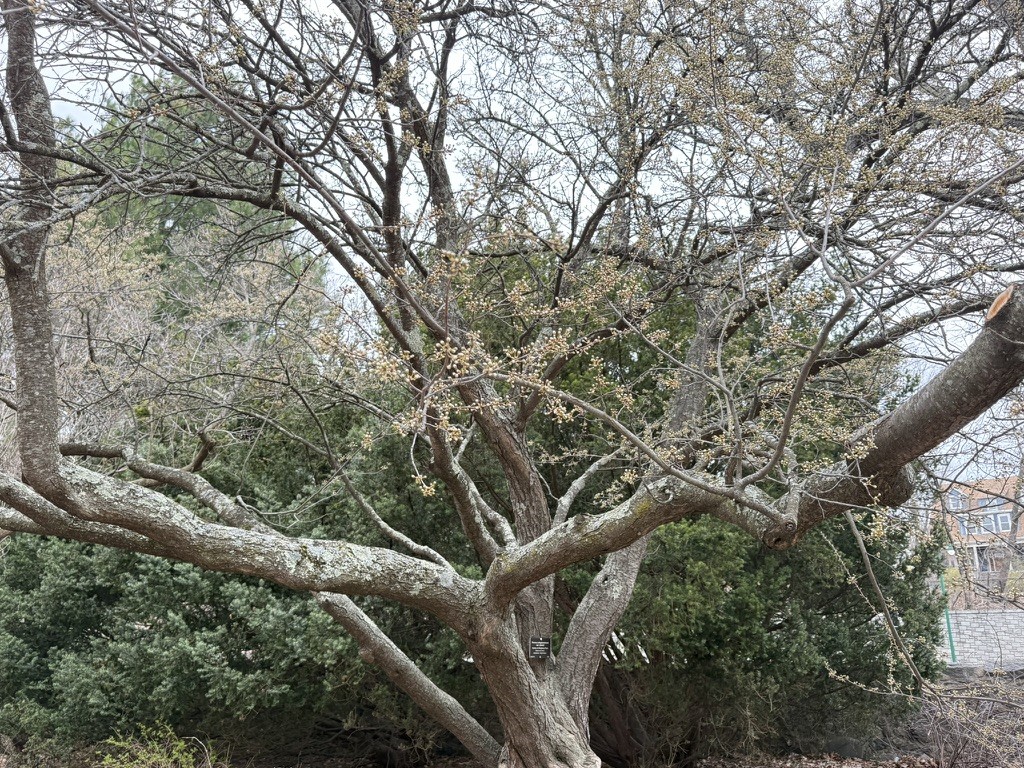
The tiny buds were ready to burst.
At the west entrance to the Arboretum — the Arborway Gate — we found an “grove” of magnolia trees. The Hunnewell Visitor Center is located in the Hunnewell Building at this entrance. It is the center for information, exhibits and public programs. A well-manicured magnolia tree welcomed us at this entrance.
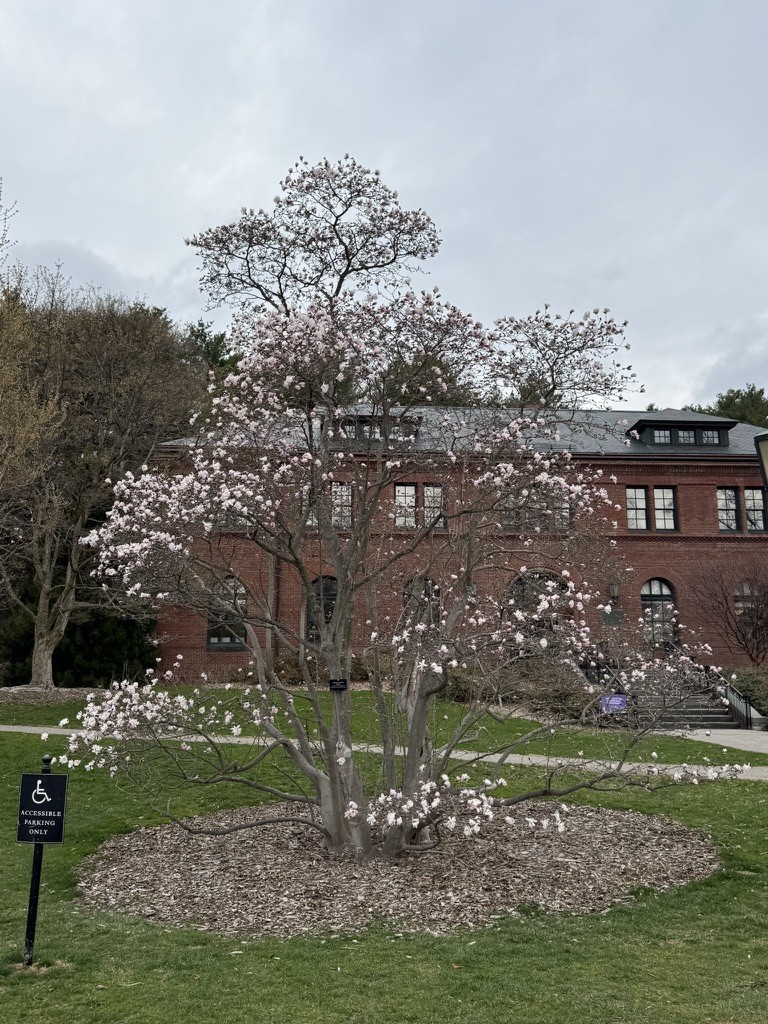
In the distance, the landscape appeared like a Impressionism painting of Claude Monet.
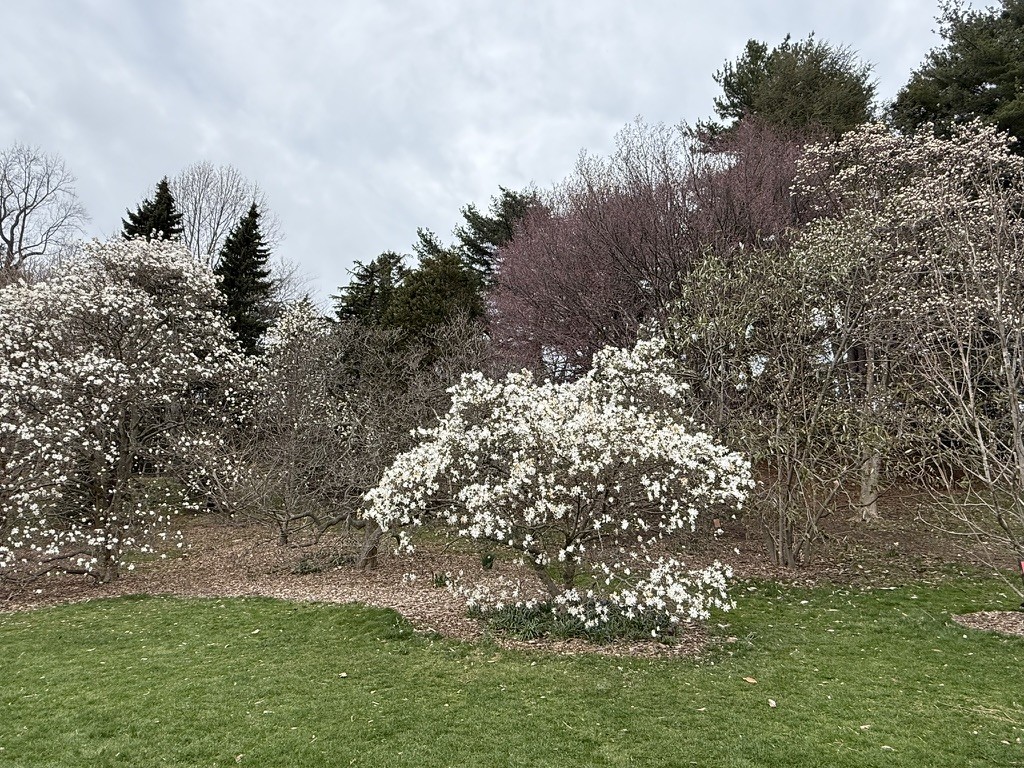
This magnolia tree was full of buds, reaching to the sky — no leaves on the branches made an interesting effect.
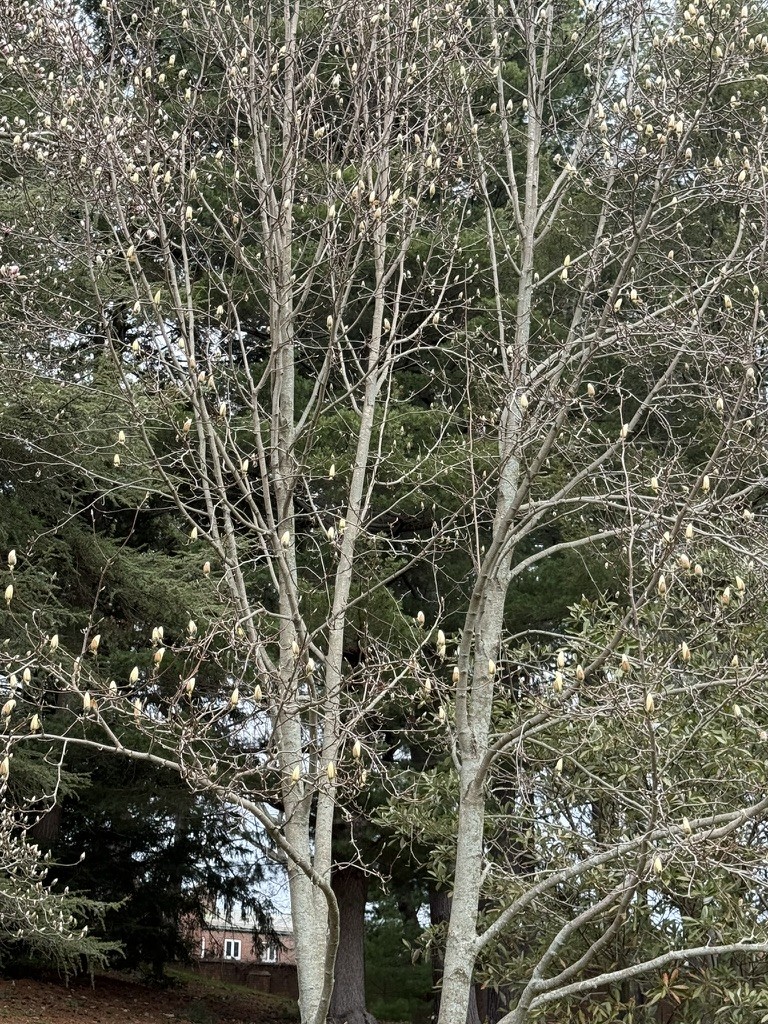
And here are the buds.
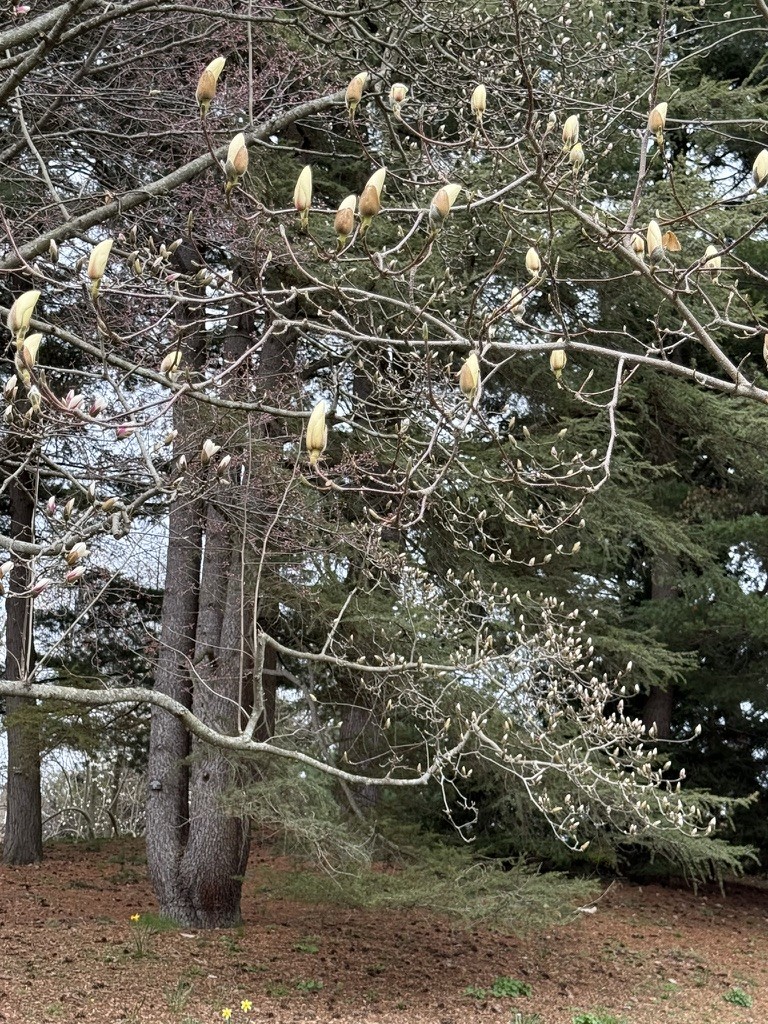
As we stepped into the grove, we found more old, stately trees.
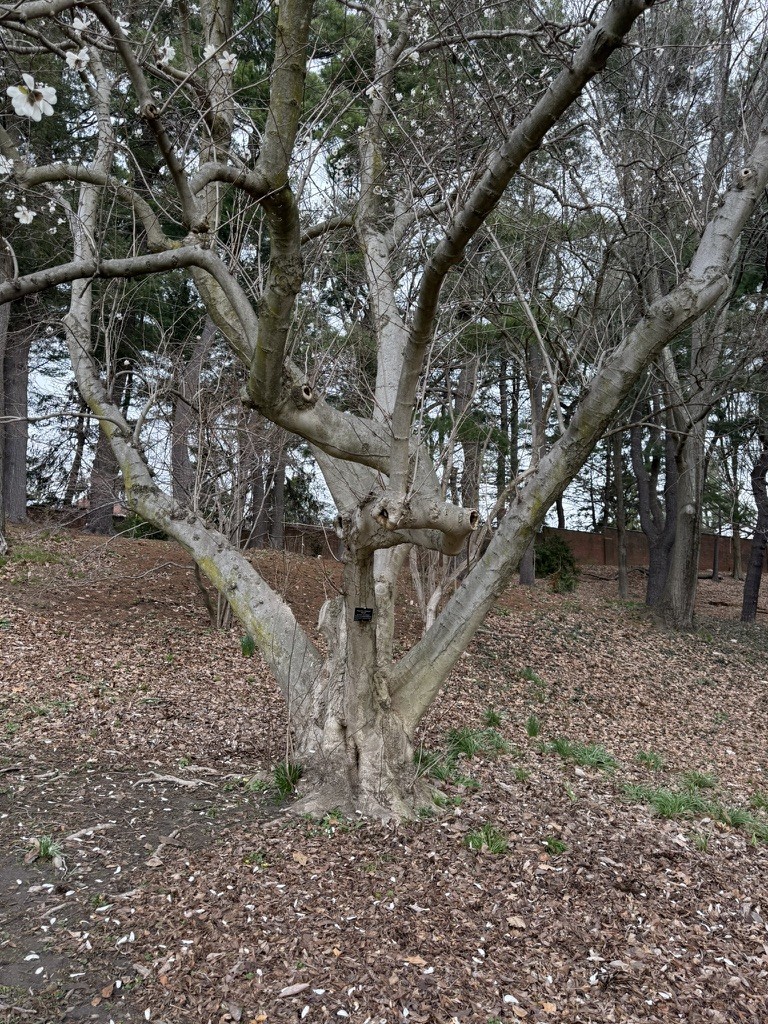
The trees were all carefully labeled.
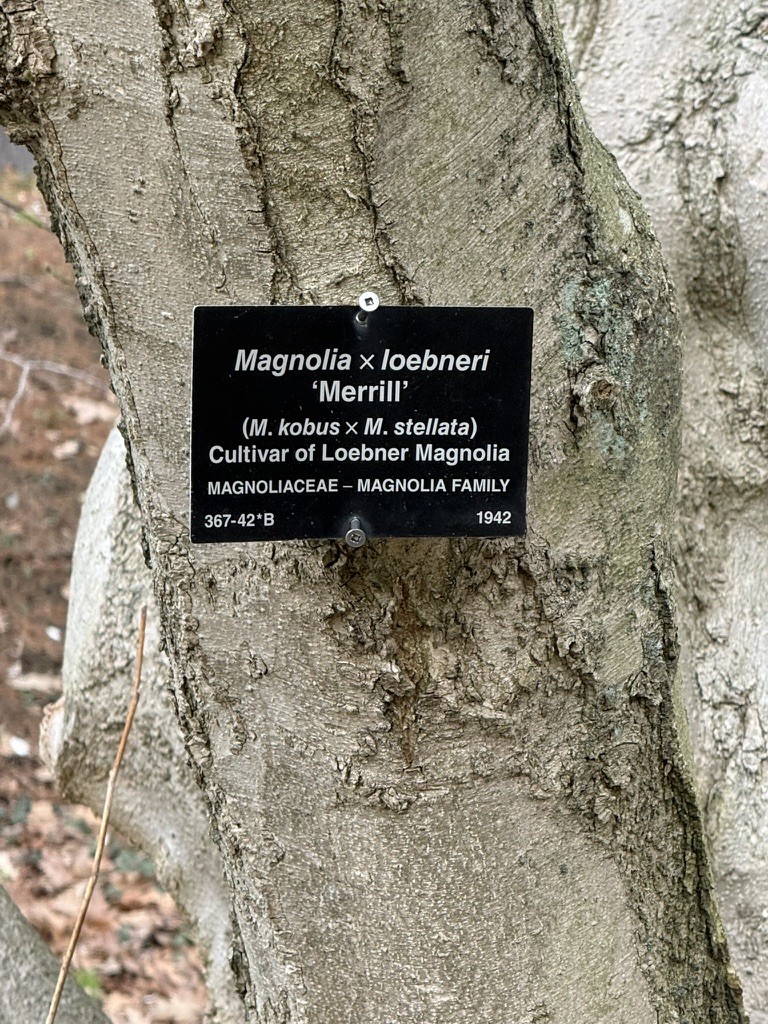
I had never seen so many varieties of magnolia trees — they all had different beautiful blossoms.
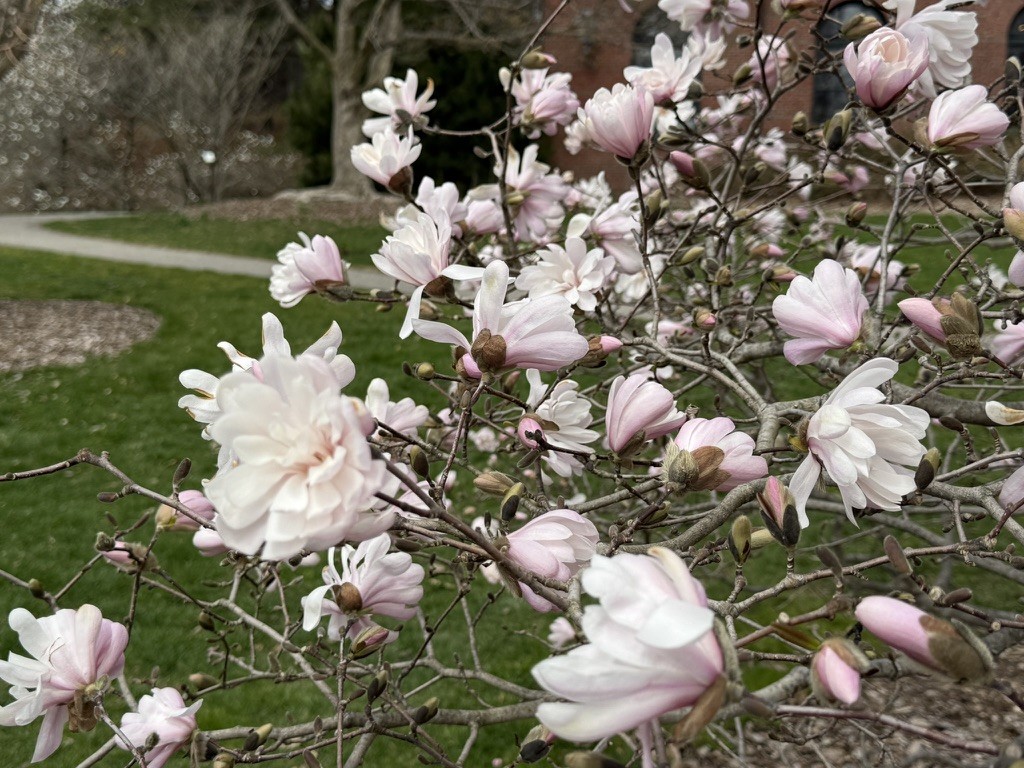
Here are more beautiful blossoms.
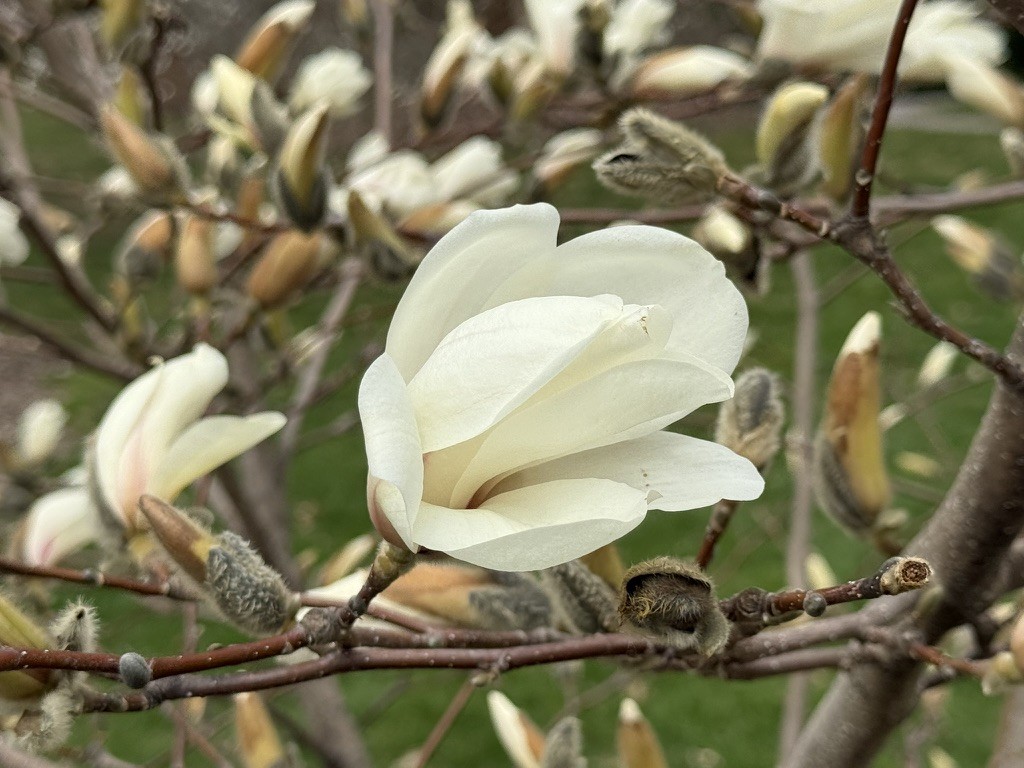
And this magnolia had light and airy white blossoms.
This Sargent Cherry Tree was planted in 1930s. It had an interesting pattern to the mahogany-colored bark.The flowers are stunning pink, single blossoms. In summer dark green foliage emerges and in fall there is red-orange color. It is native to Japan, Korea, and Russia,
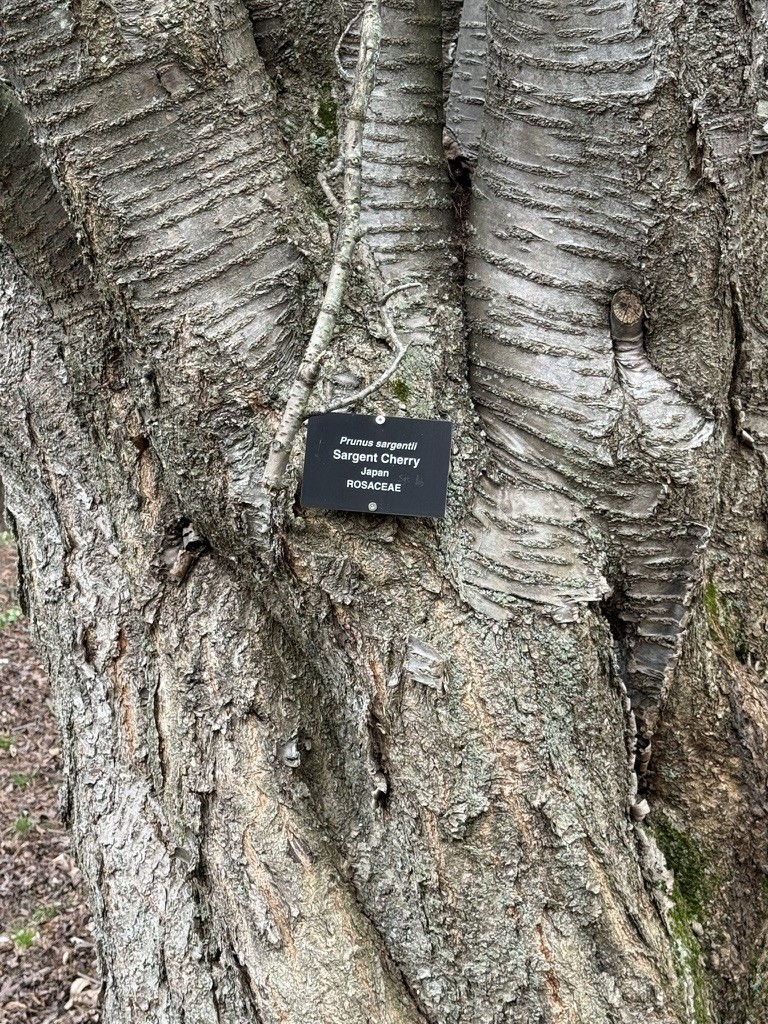
I found the twisted, gnarled trunk to be fascinating.
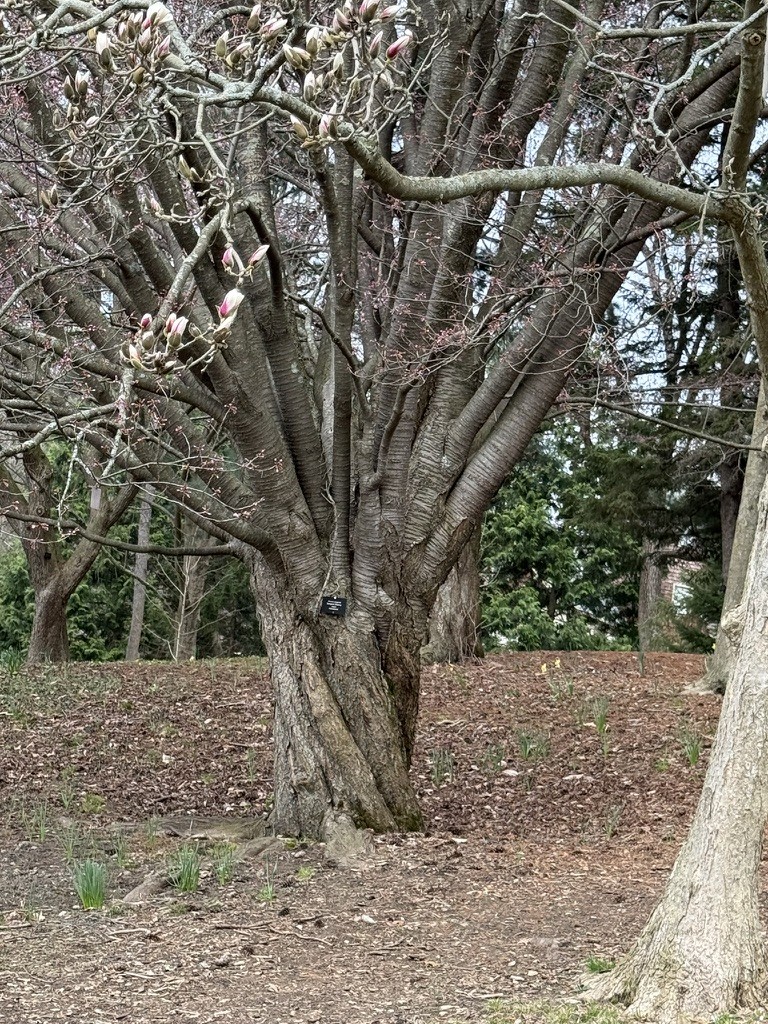
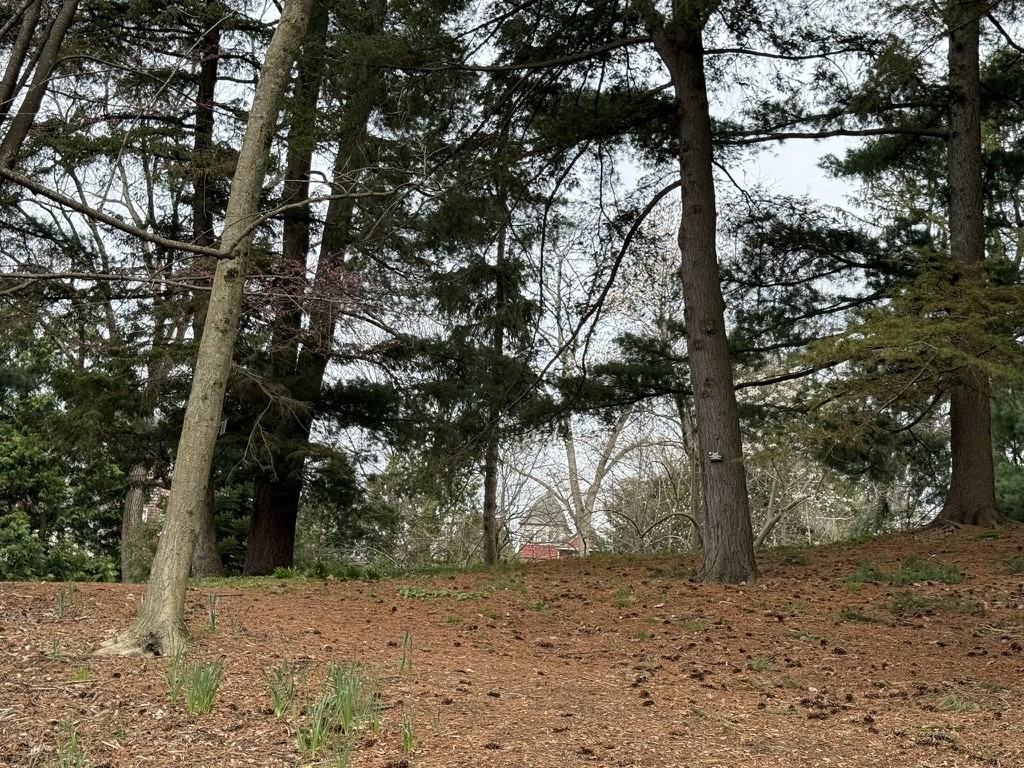
The trees in the background made an interesting frame for this landscape portrait.
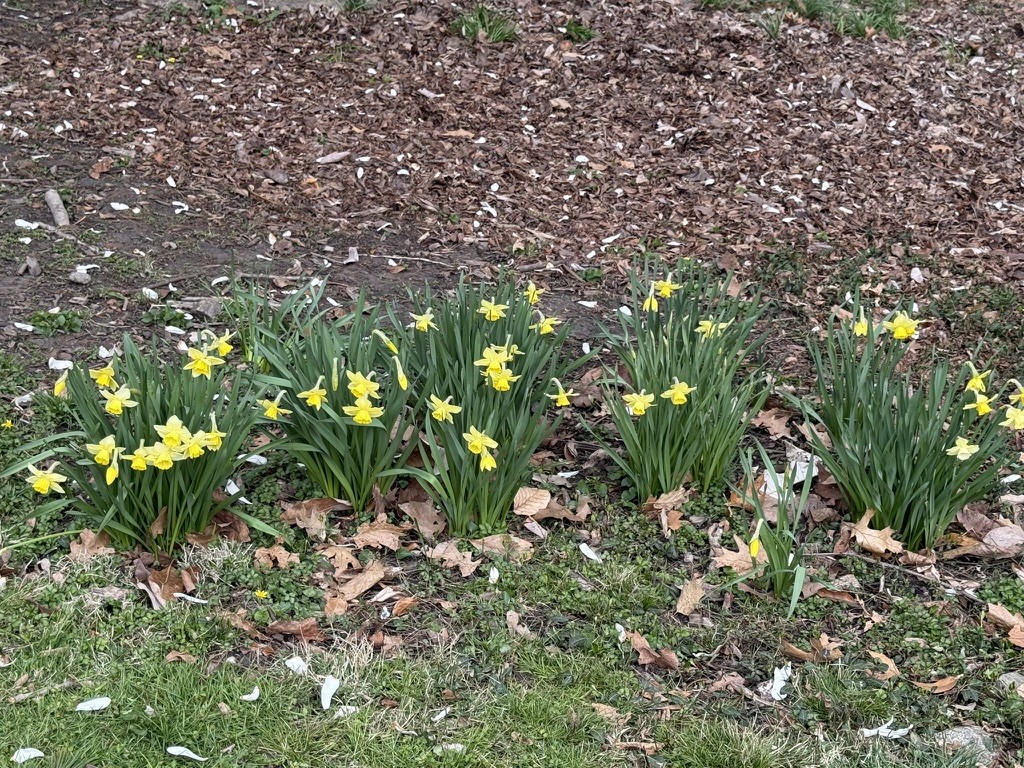
Flowers were blooming, too. Daffodils are some of the first bulbs to fill the landscape with yellow color.
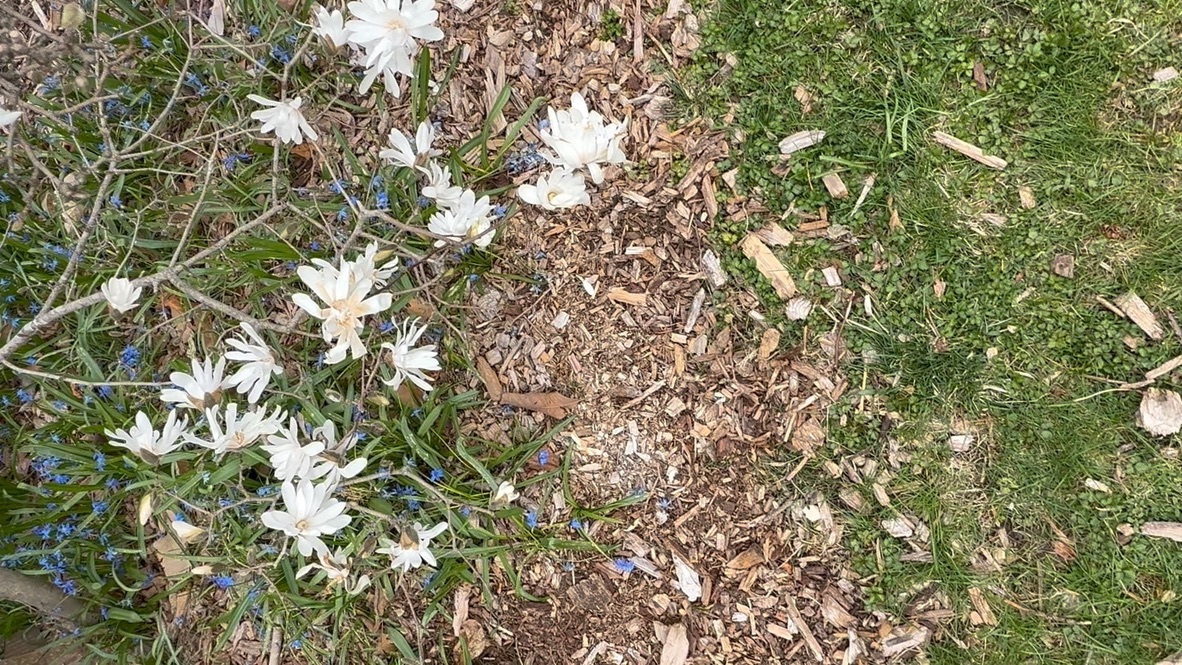
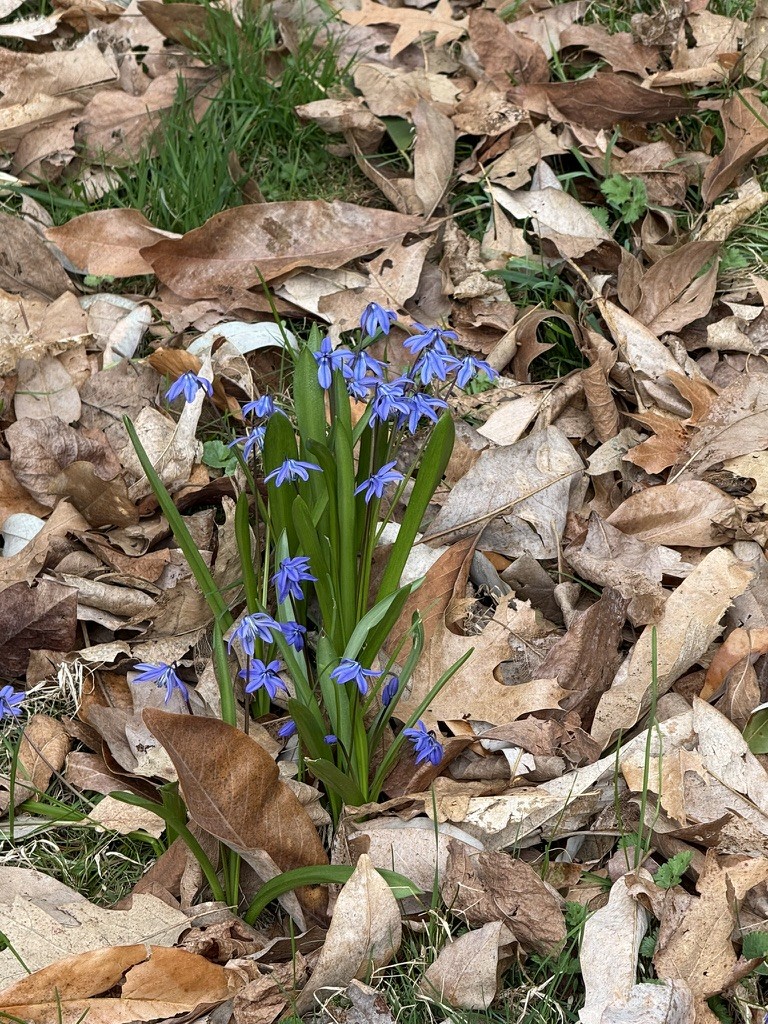
These tiny blue bulbous perennials are called Siberian squill. They are native to southwestern Russia, the Caucasus and Turkey. They flower early in spring and then become limp and fade into the background the rest of the year.
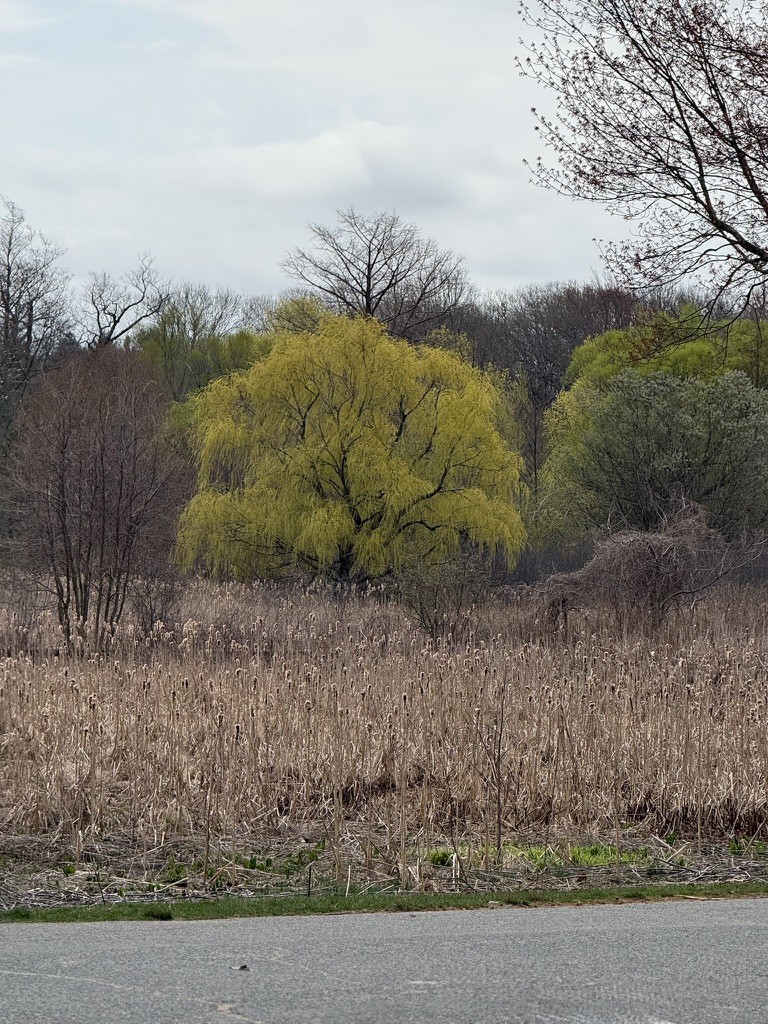
As we turned in the other direction, we noticed a field with a marsh and a huge willow tree in the distance.
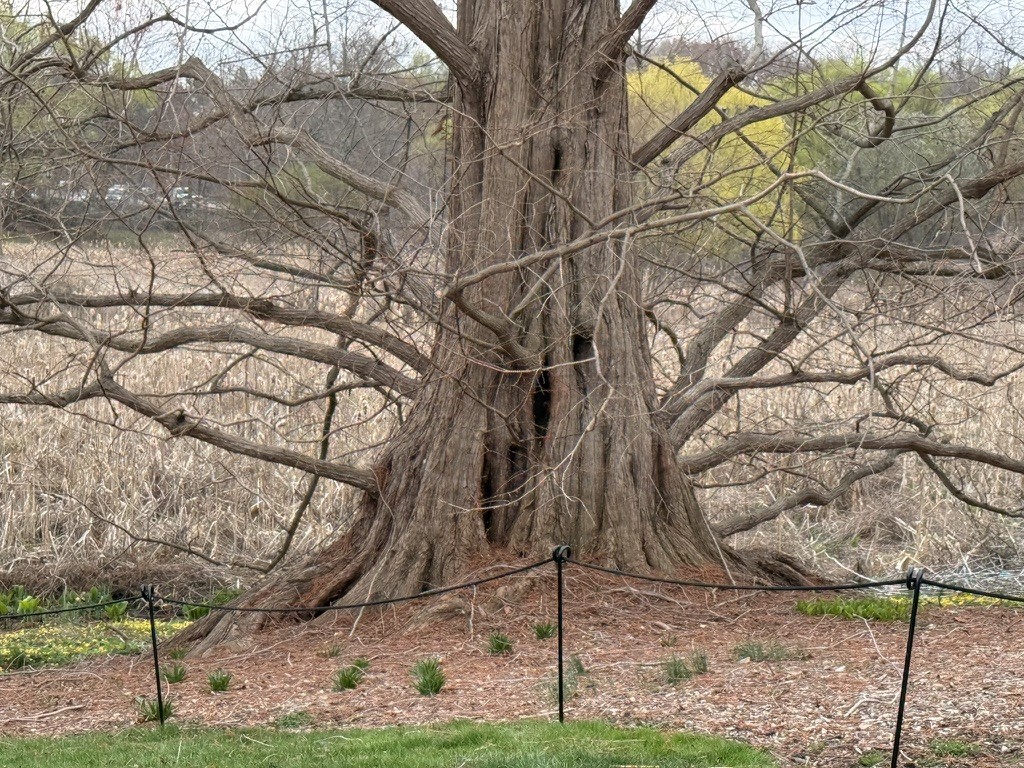
And, yet another majestic tree by the side of the road.
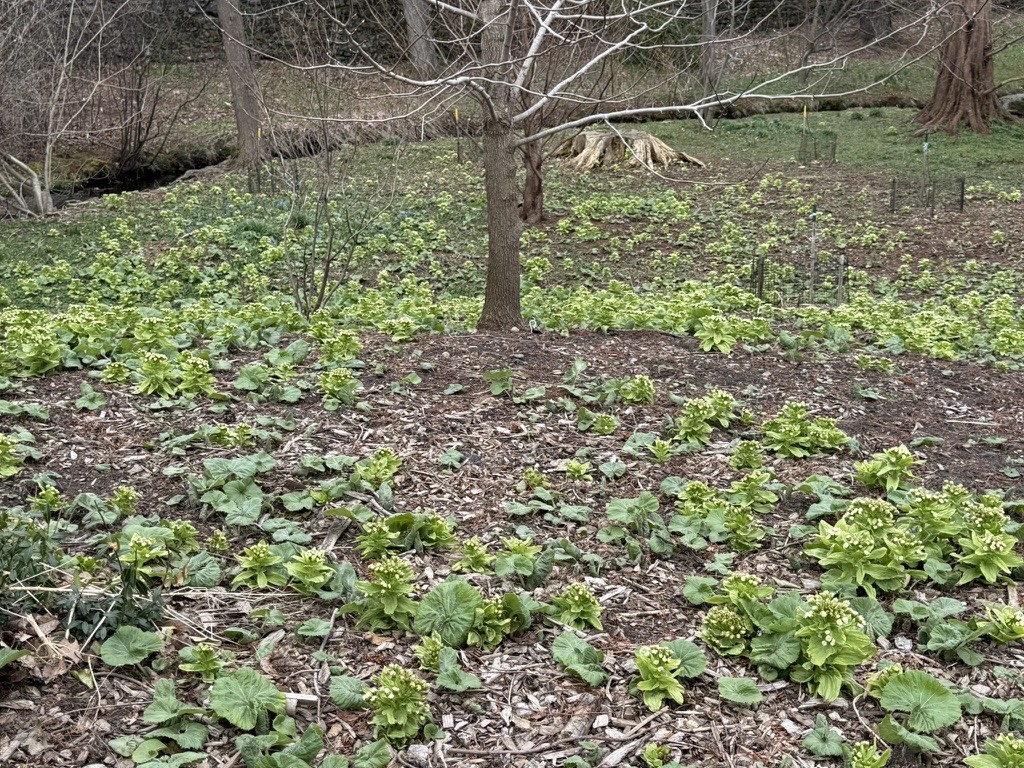
An interesting aster — a giant butterbur — was close to the entrance. This plant is a perennial which grows well in shaded areas near water. It has large heart or kidney-shaped leaves. It is spread by rhizomes which allows expansion of clumps of plants. It is native to China, Russia, Korea and Japan and is considered to be an invasive specials in some areas. I am sure that these plants will grow to be quite large by summertime.
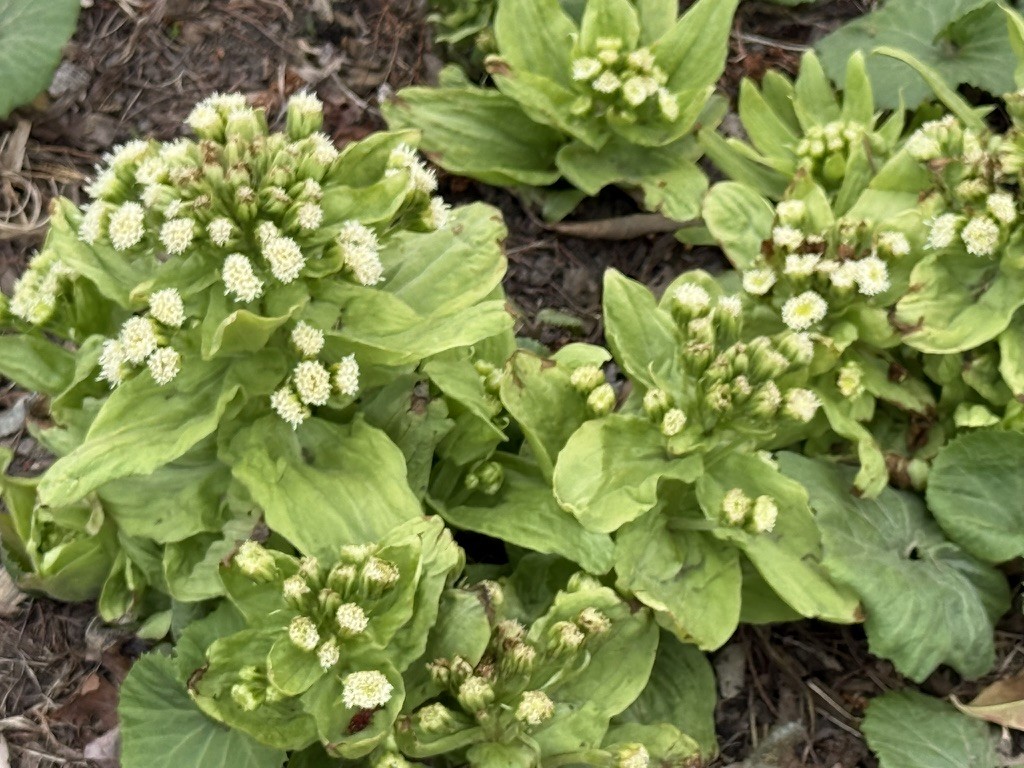
In April, it gave several interesting photo opportunities.
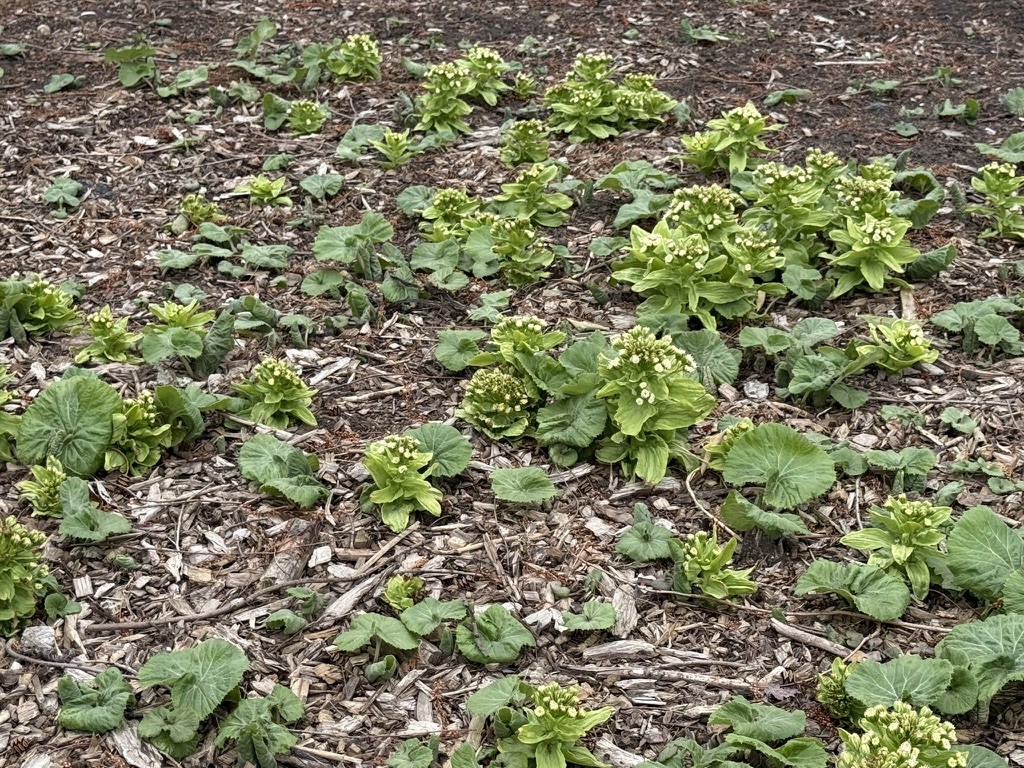
It seemed like an entire field of the giant butterbur.
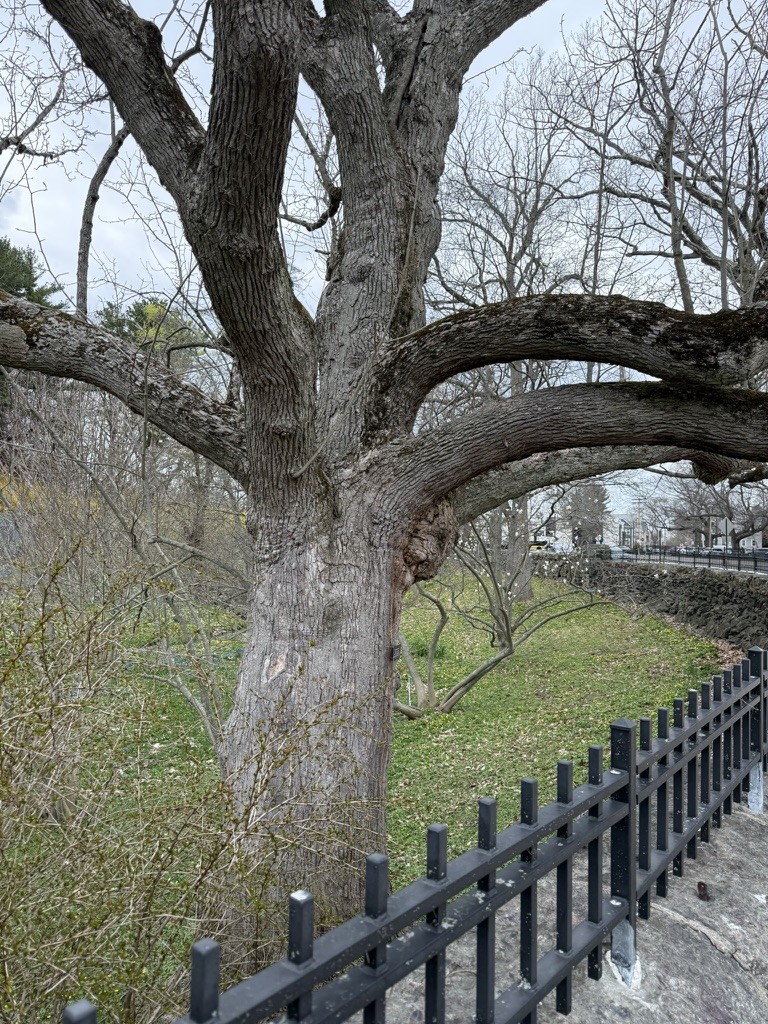
As we left, we passed yet another unique tree. It was labeled a “Cucumbertree” (Magnolia acuminata) because it has large fruit/flowers on branches in the summertime which appear like cucumbers. Other names included cucumber magnolia, yellow cucumbertree, yellow-flower magnolia and mountain magnolia. It is the most widespread and hardiest of the eight native magnolia species in the United States, and the only magnolia native to Canada.
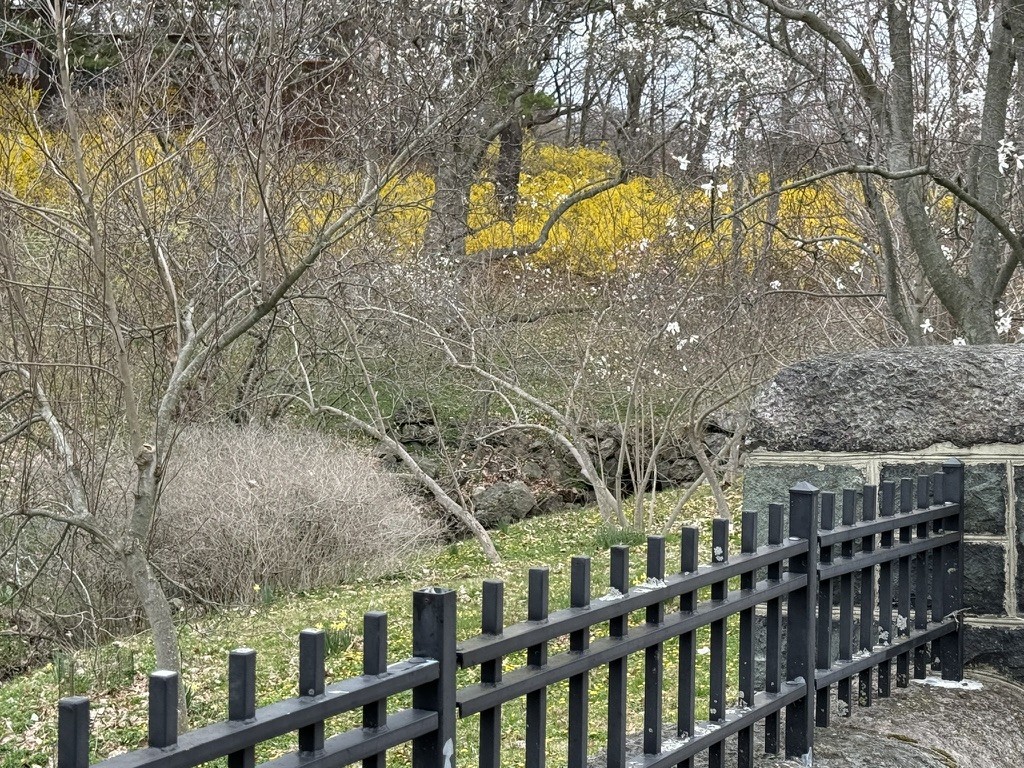
At entrance we saw bright yellow forsythia blossoms which brightened up our day and the bleak late winter scenery of Boston. Forsythia is a deciduous shrub of the olive family. The flowers emerge before the leaves making quite a showy presentation.
Our short walk through the magnolia grove and — further along in the park — through the plum and cherry trees, made a welcome activity during our visit to Boston. As the year progresses, different shrubs and trees shine. We love the month of May when lilacs bloom. I’m sure we will return and stop here in future visits to Boston.
In the meantime, we will enjoy the magnolia trees, bursting with buds and swaying in the breeze, reaching for the sky.
The picture gallery for this post is Harvard Arboretum Gallery
More information:
Harvard Arnold Arboretum website